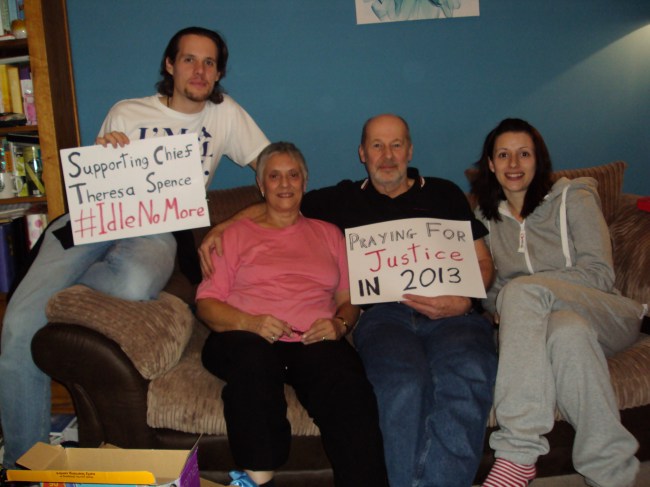
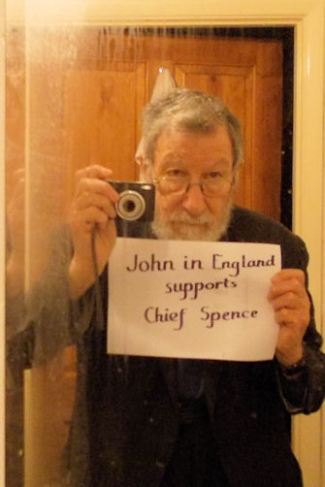
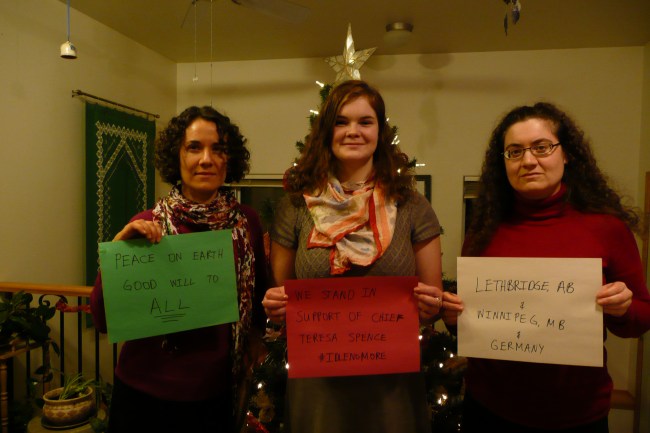
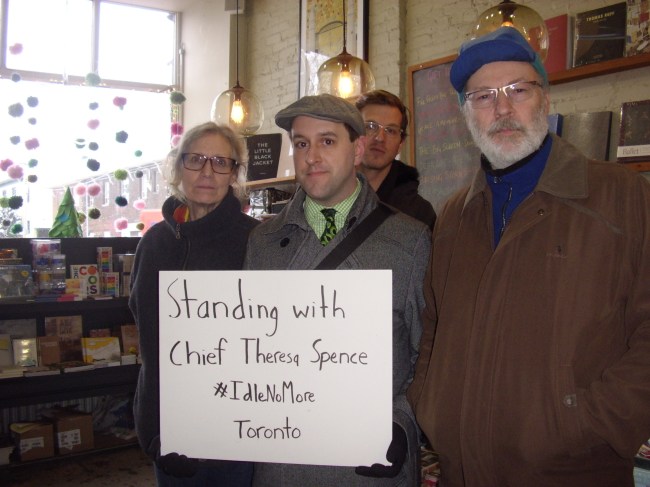
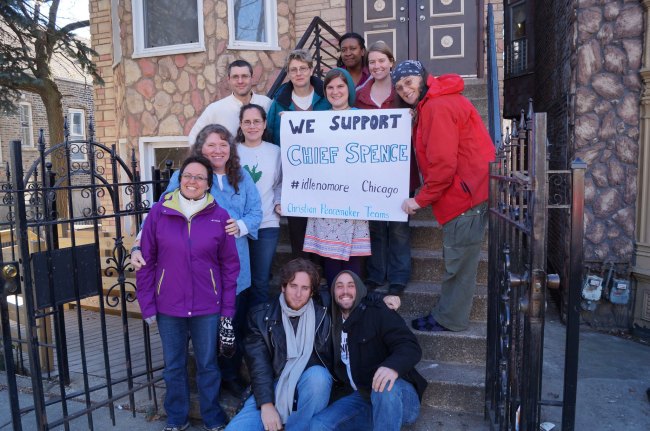
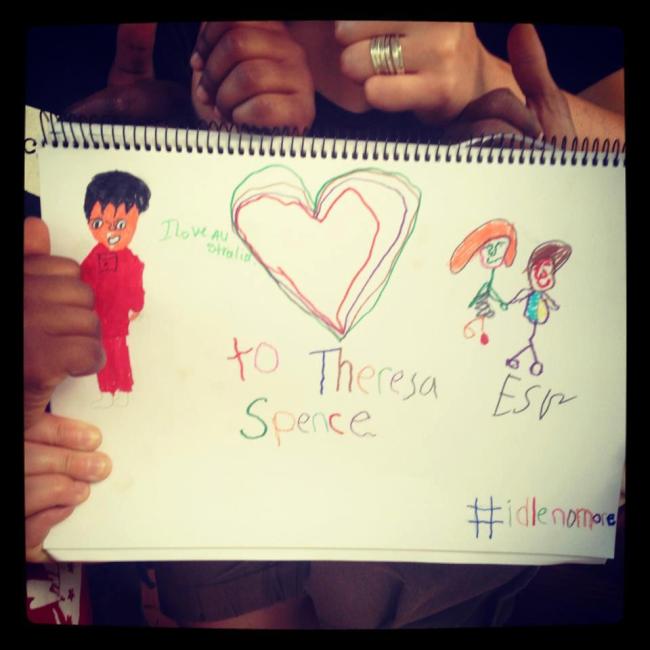
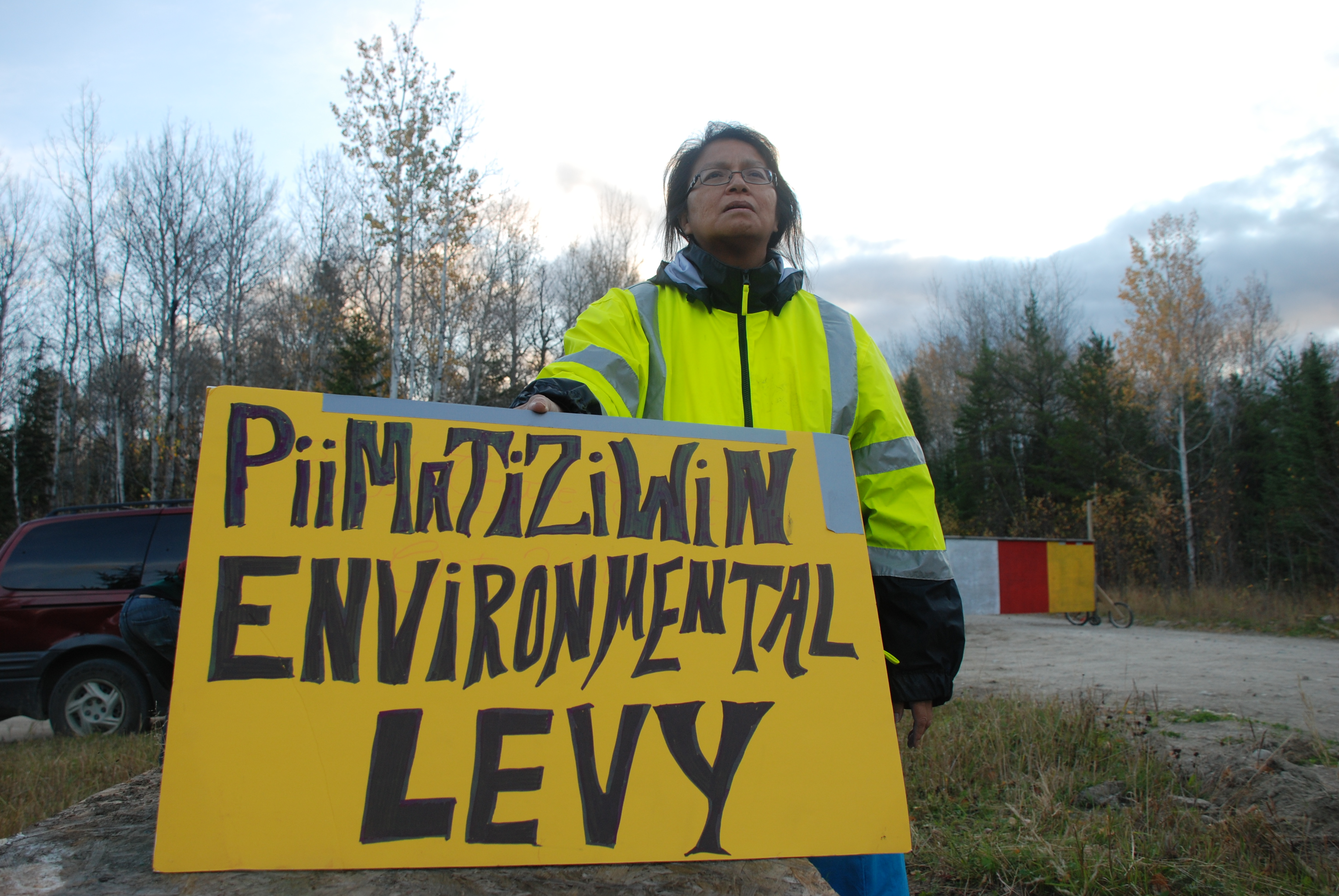
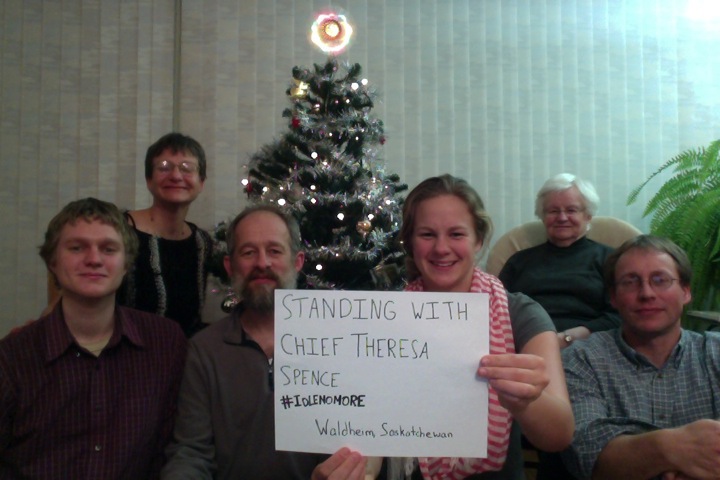
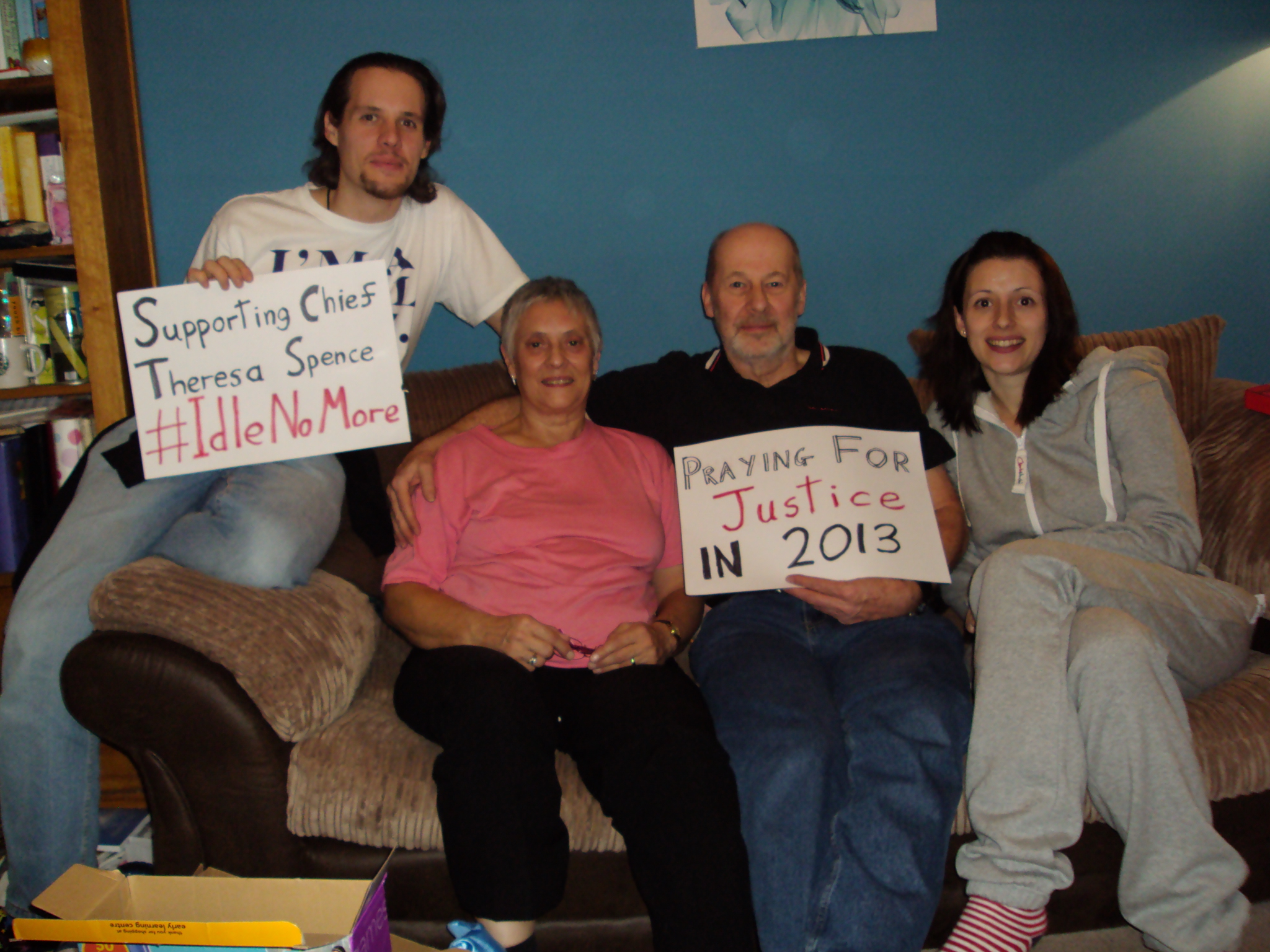
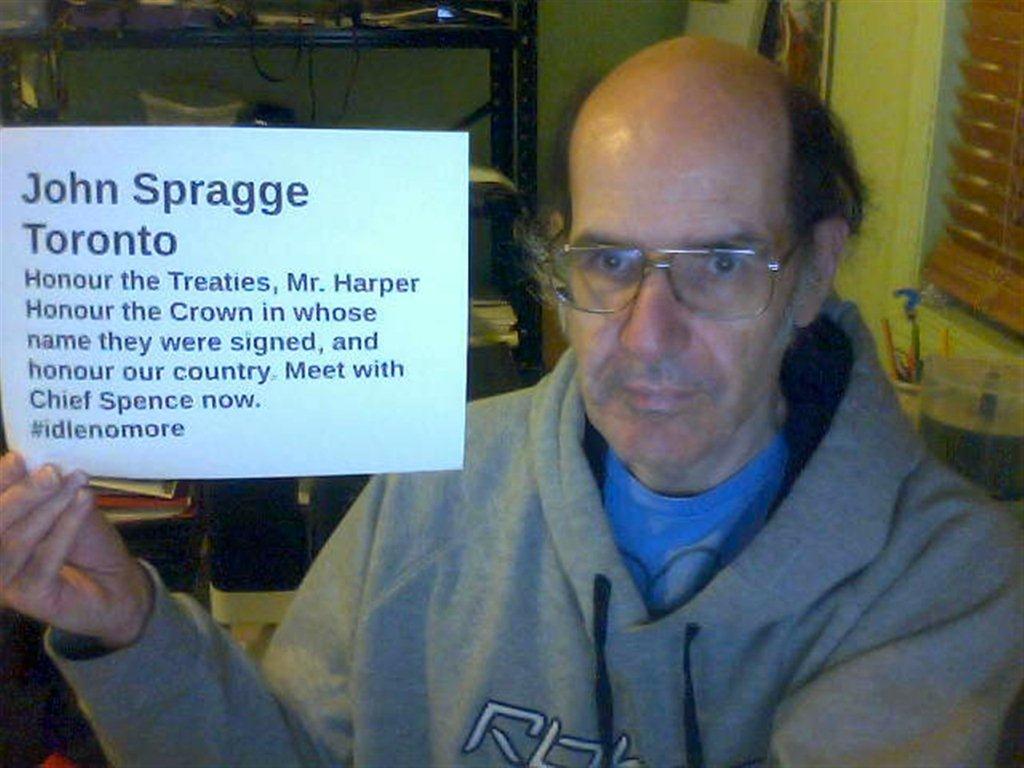
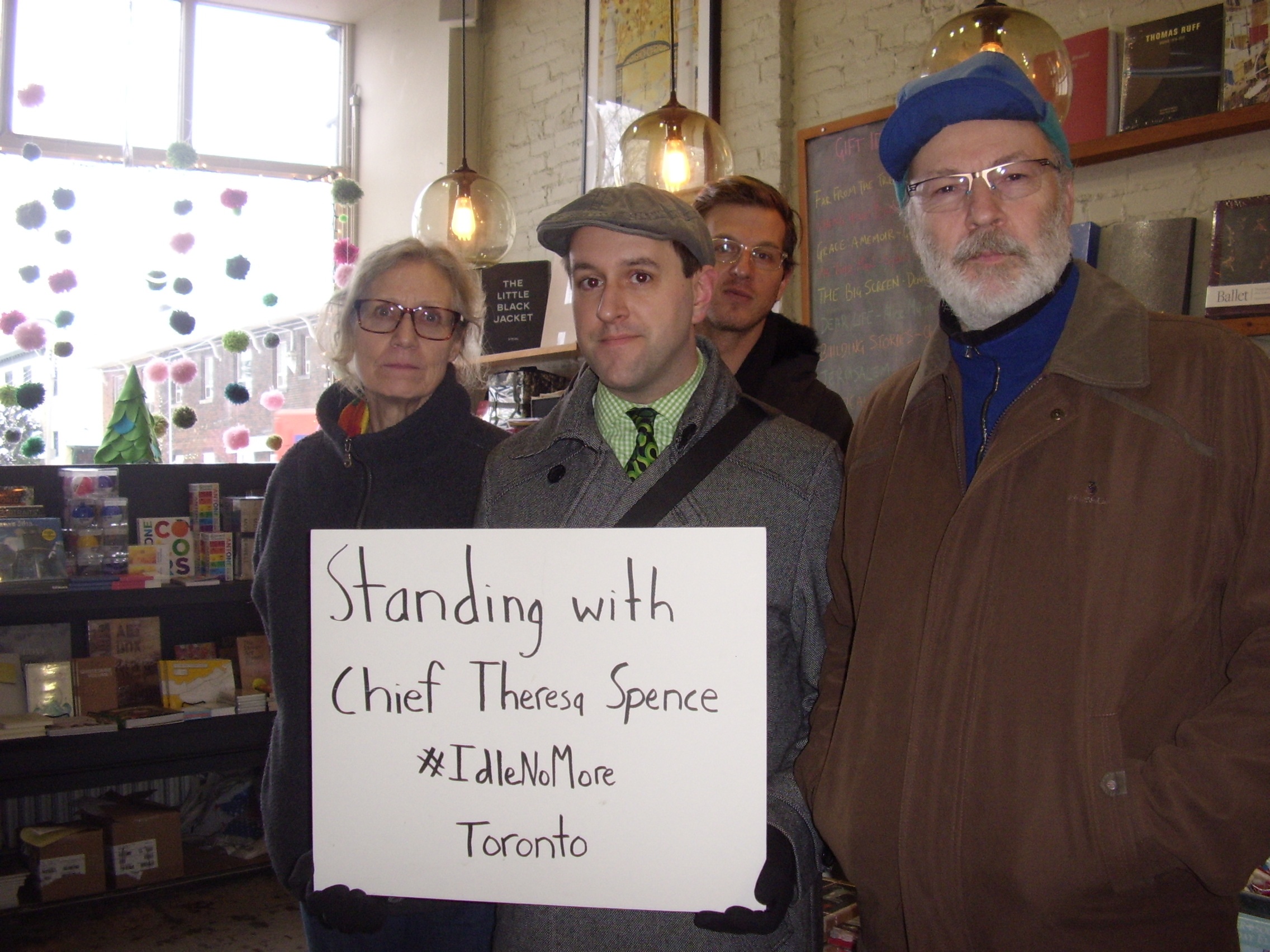
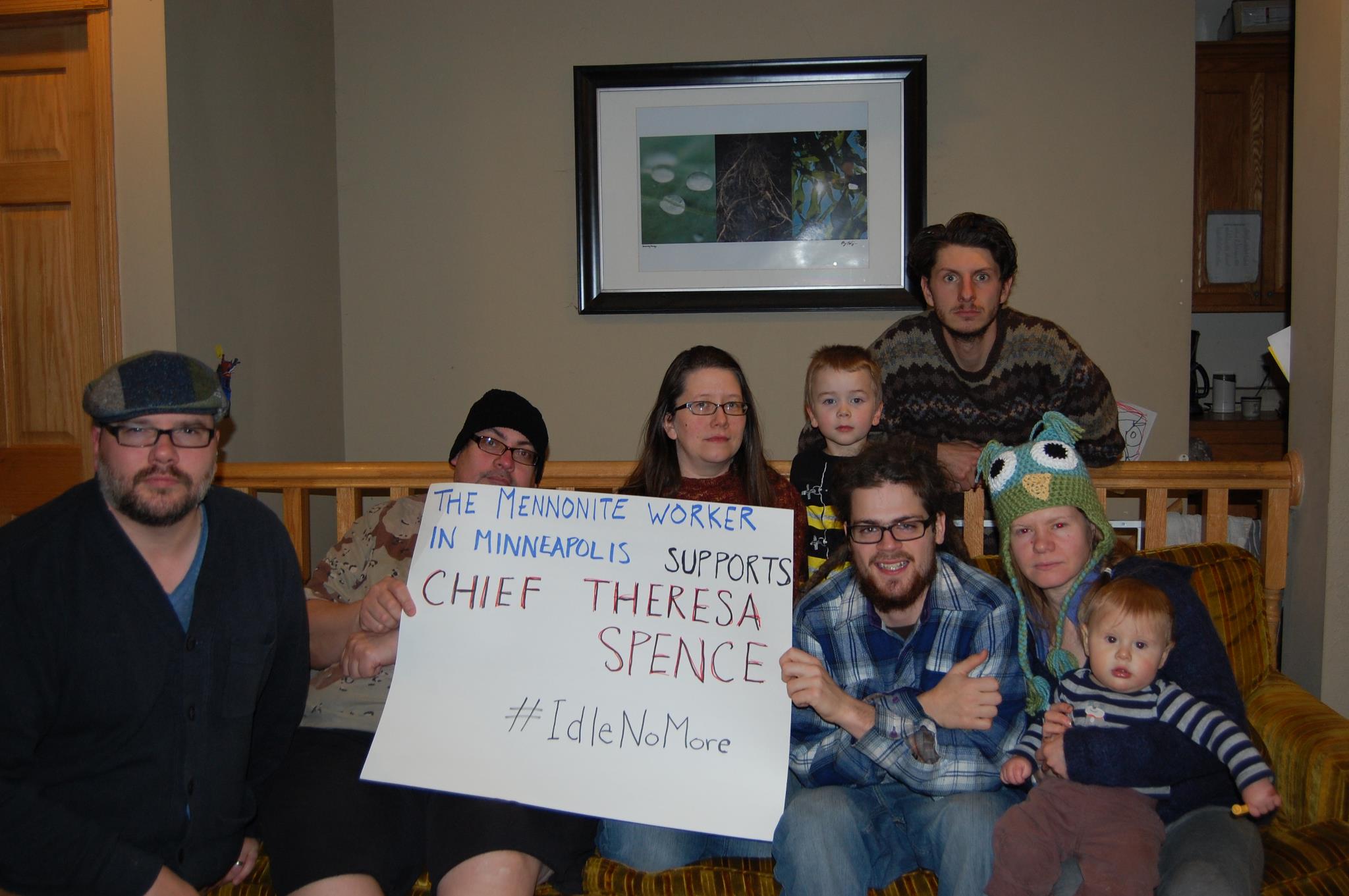
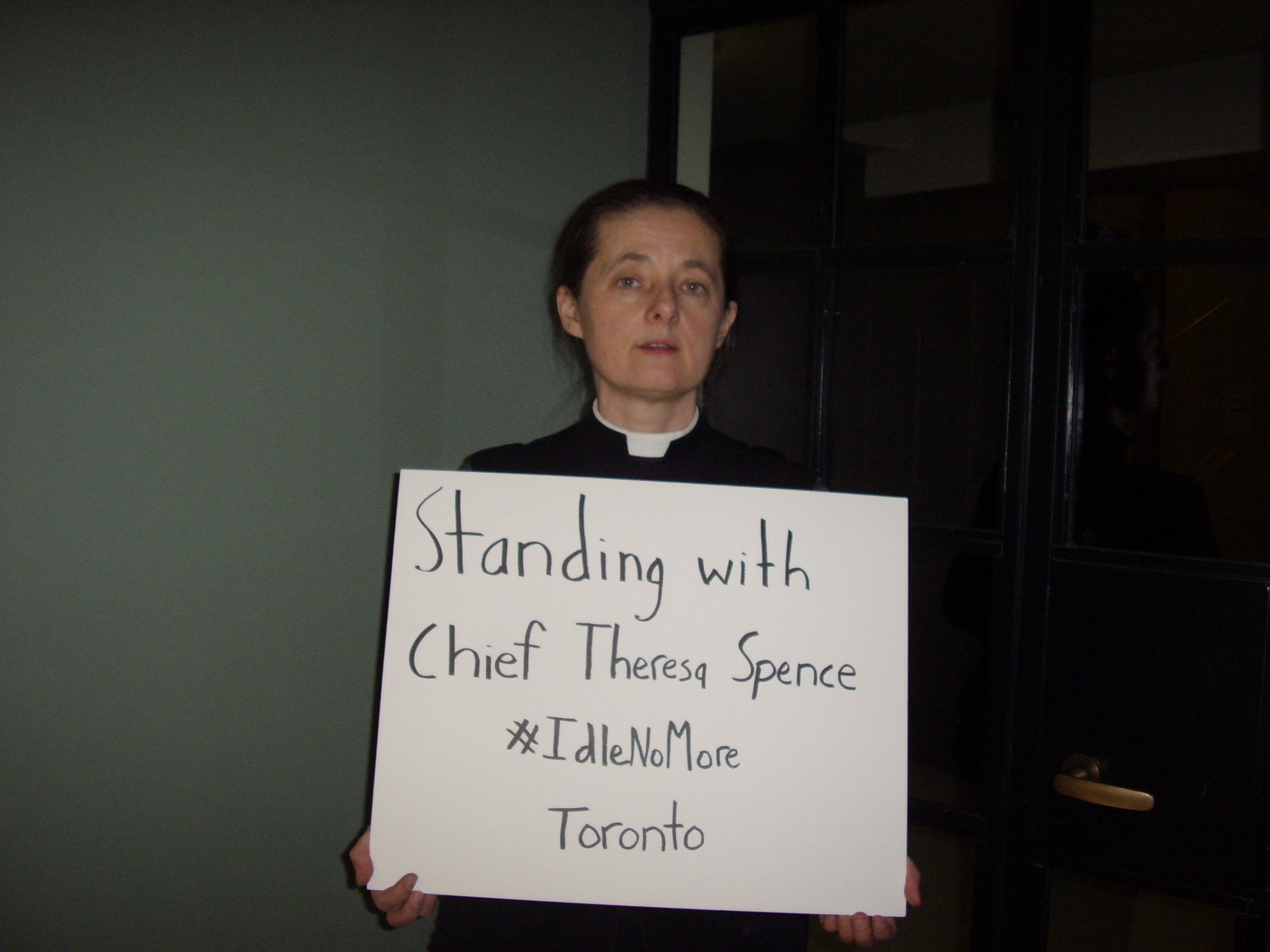
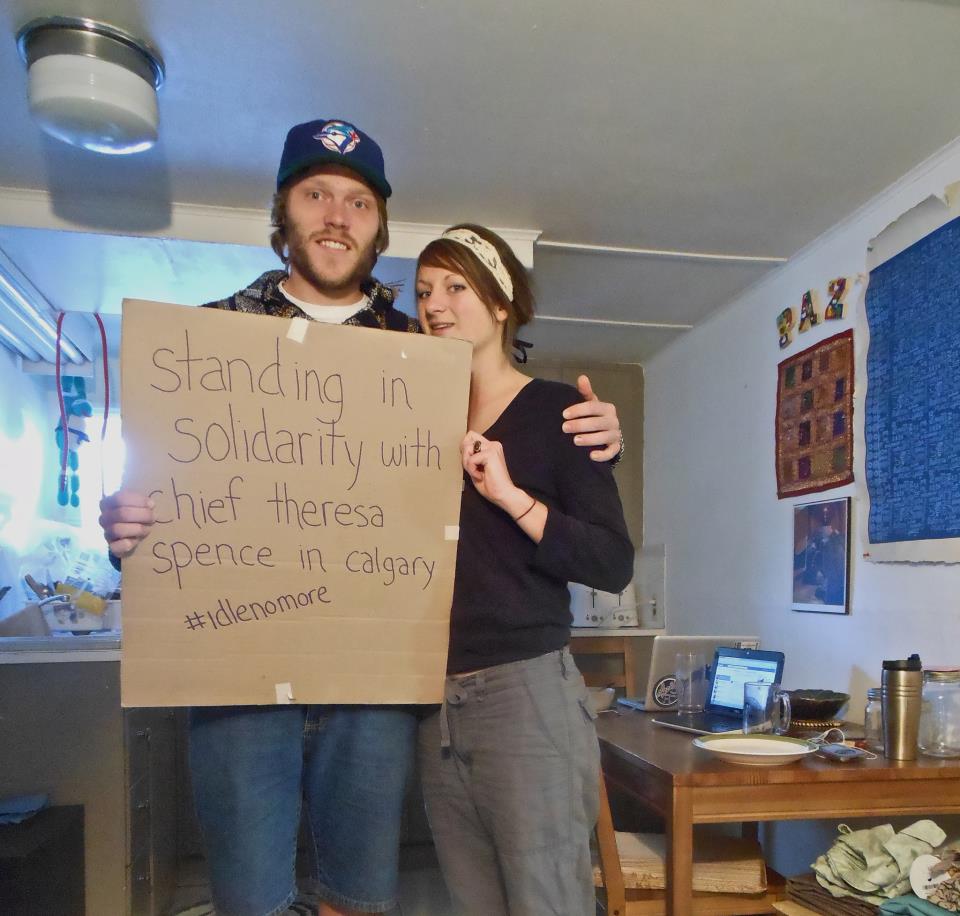
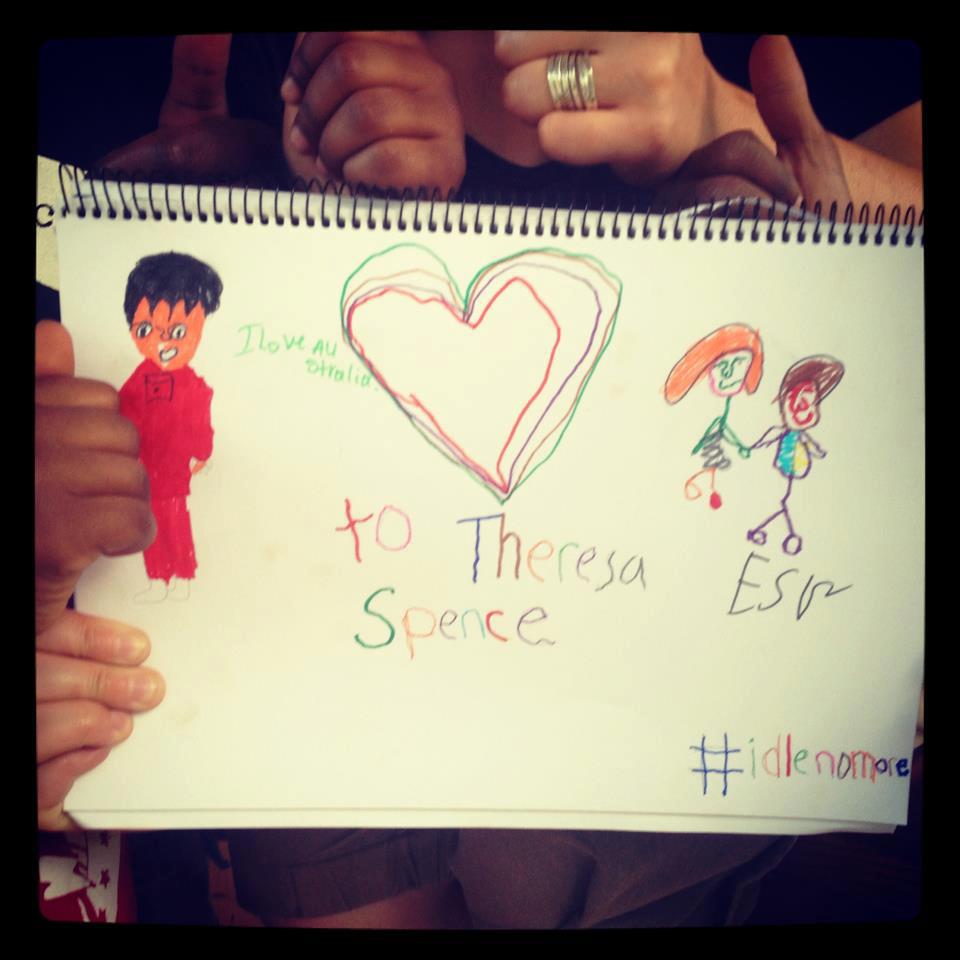
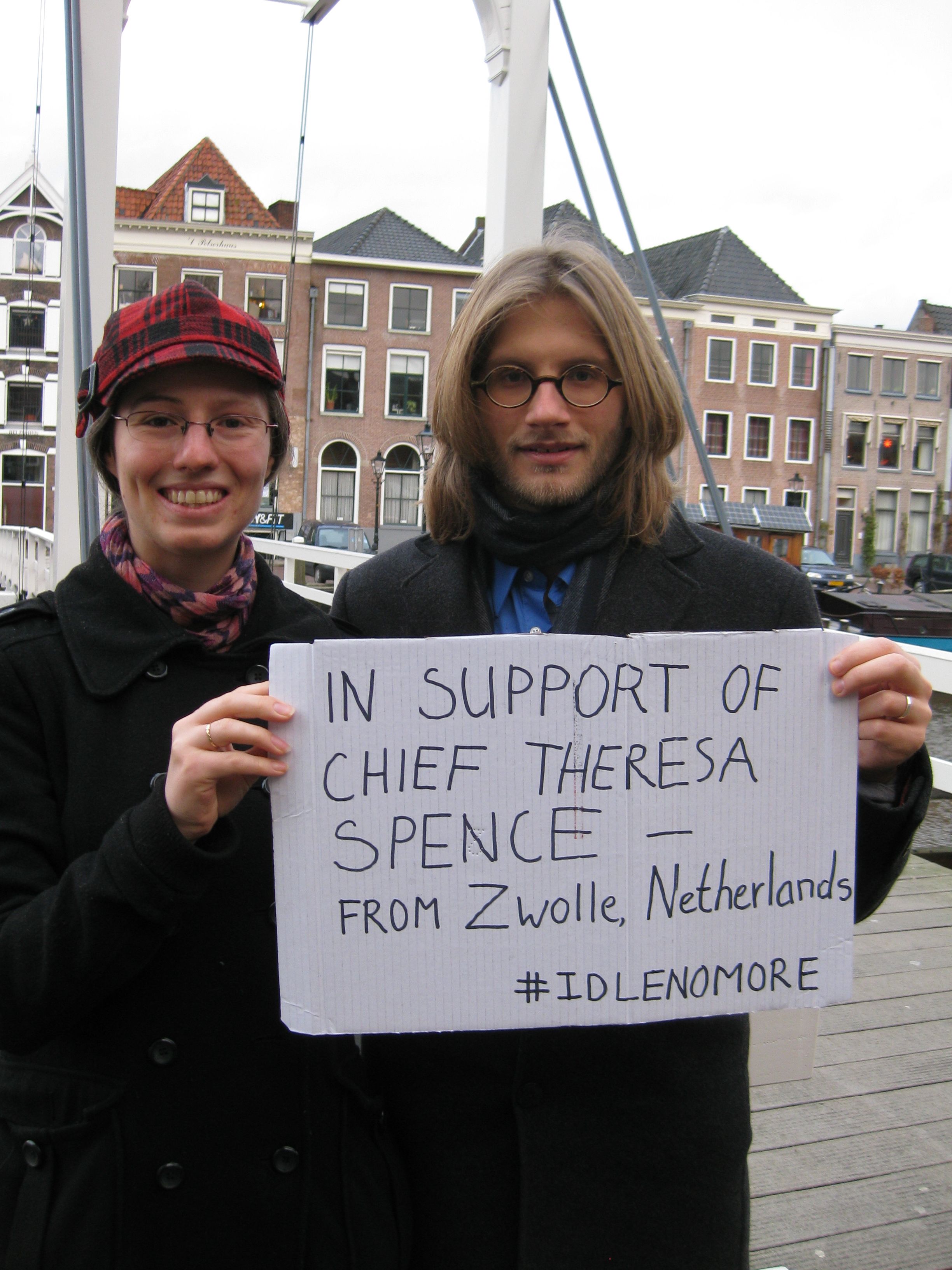
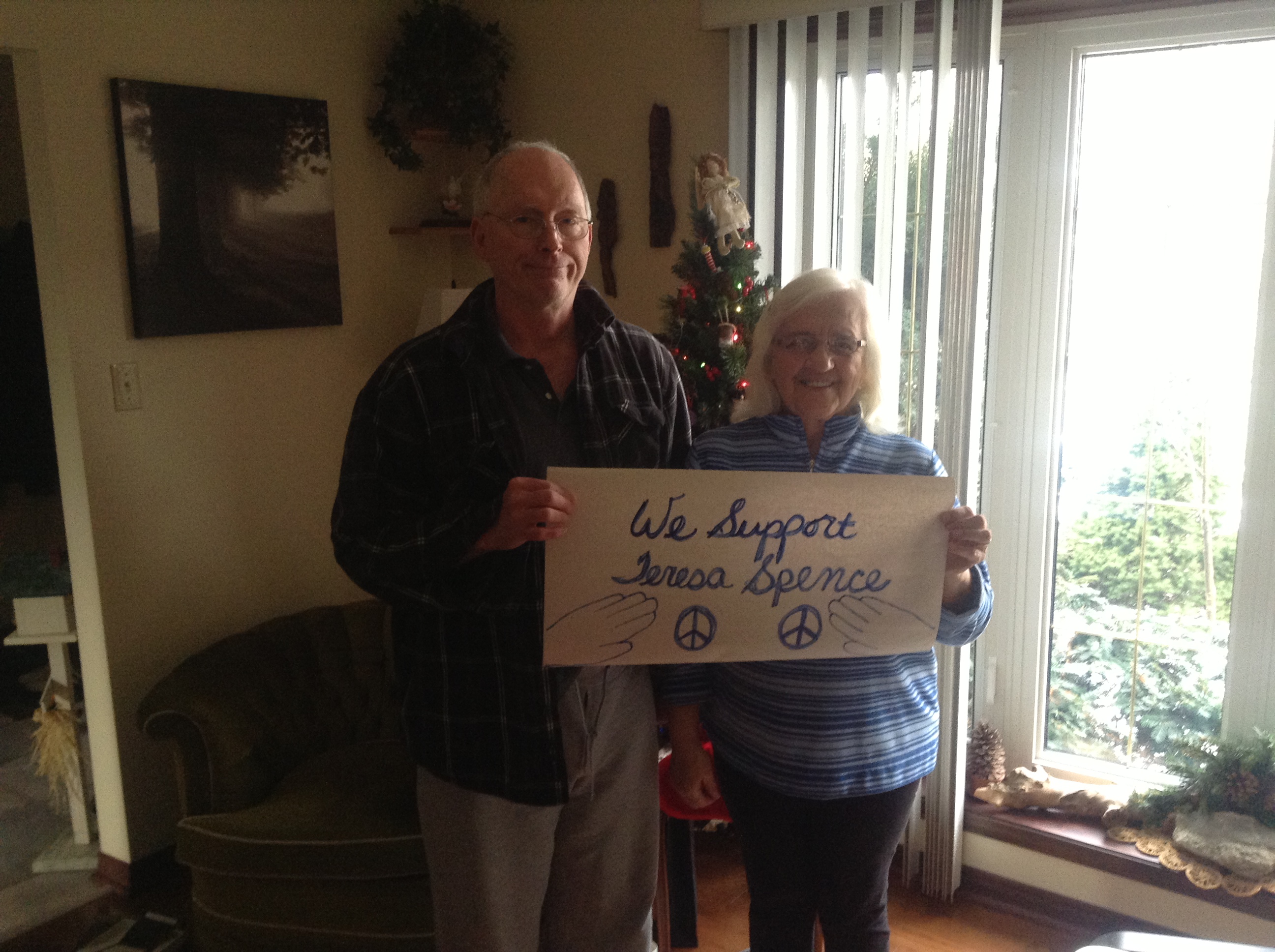
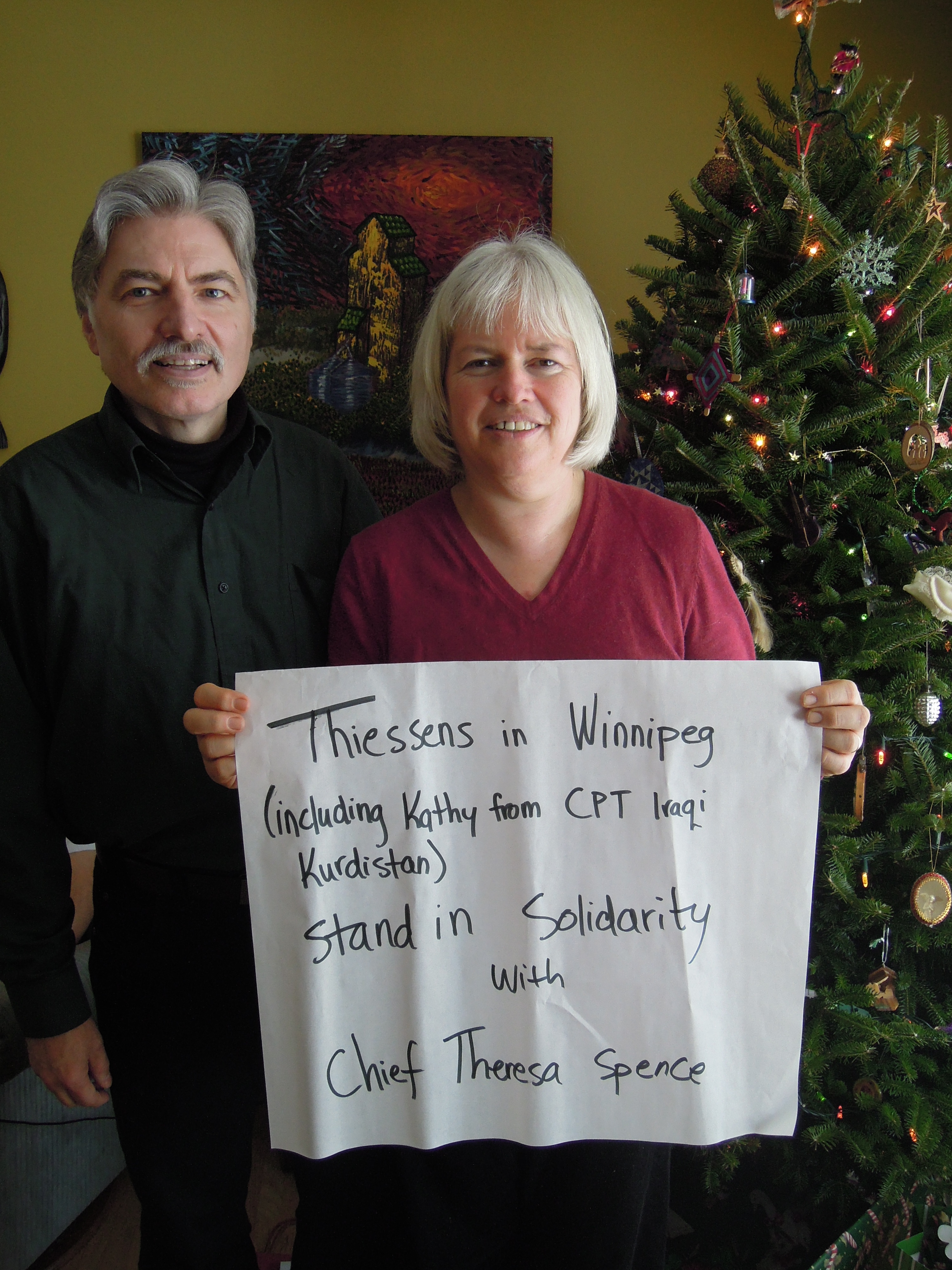
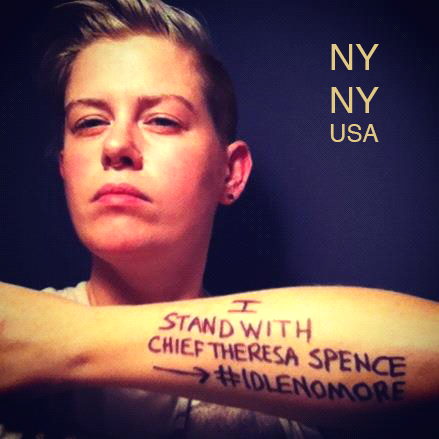
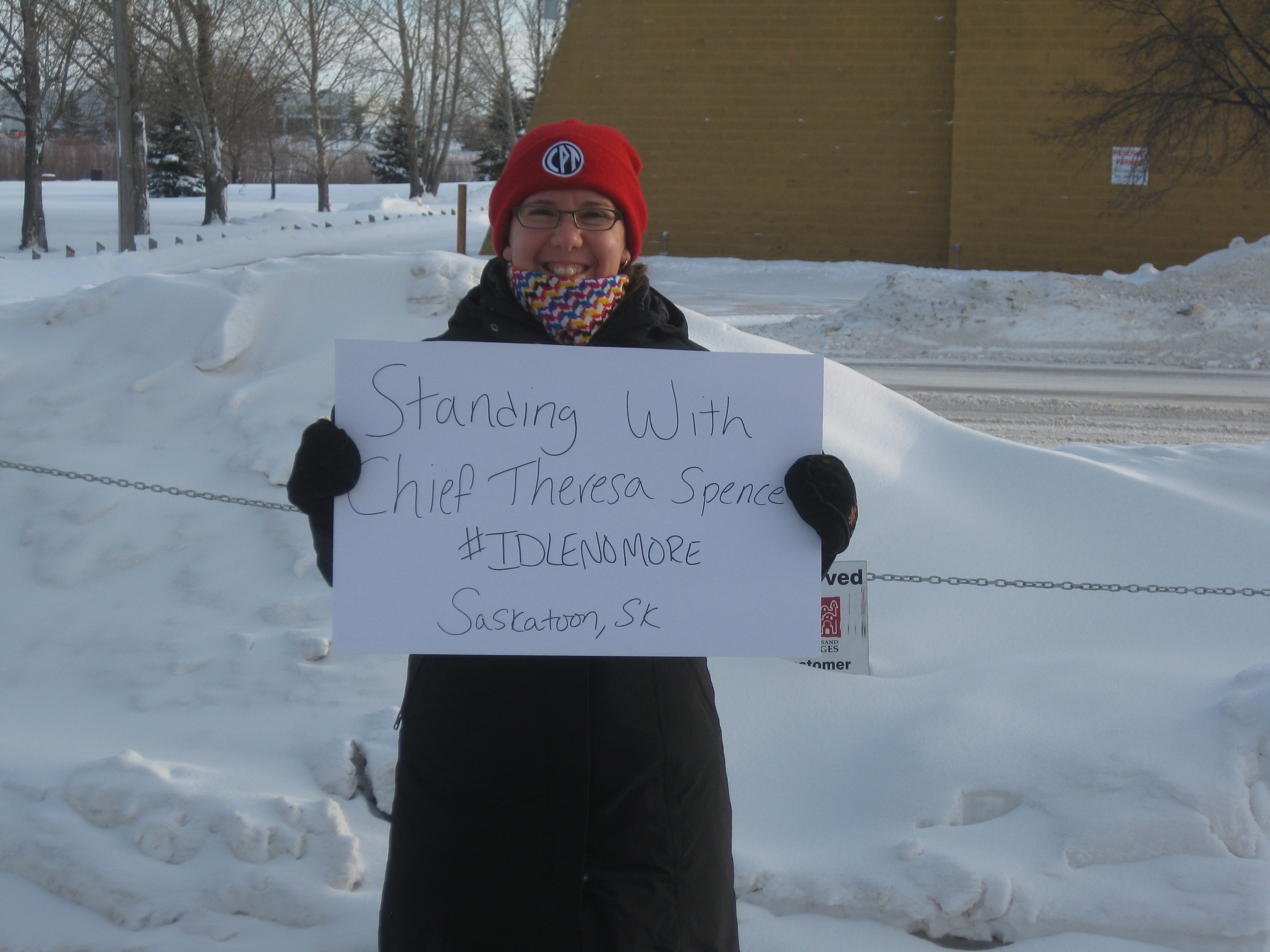
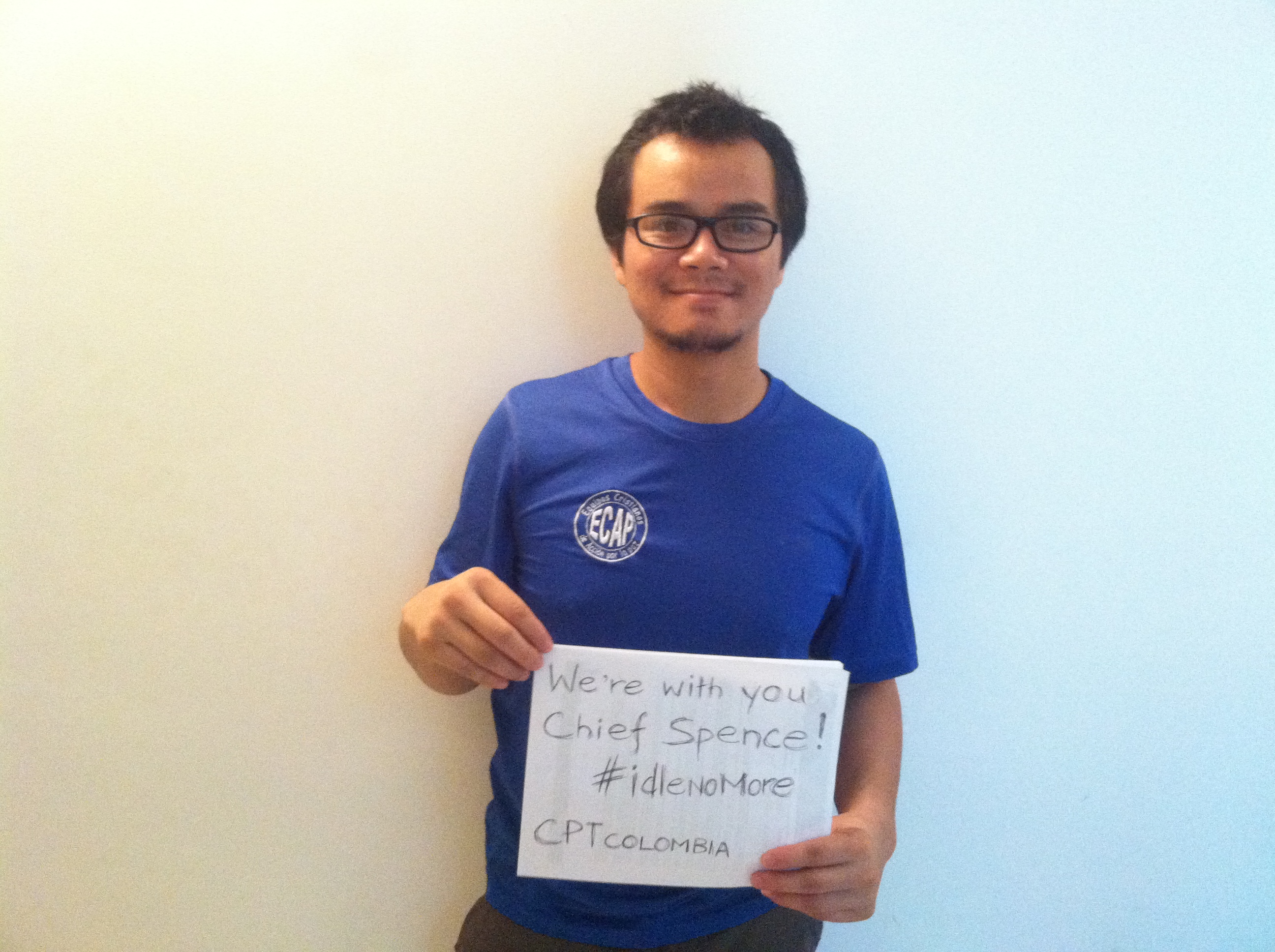
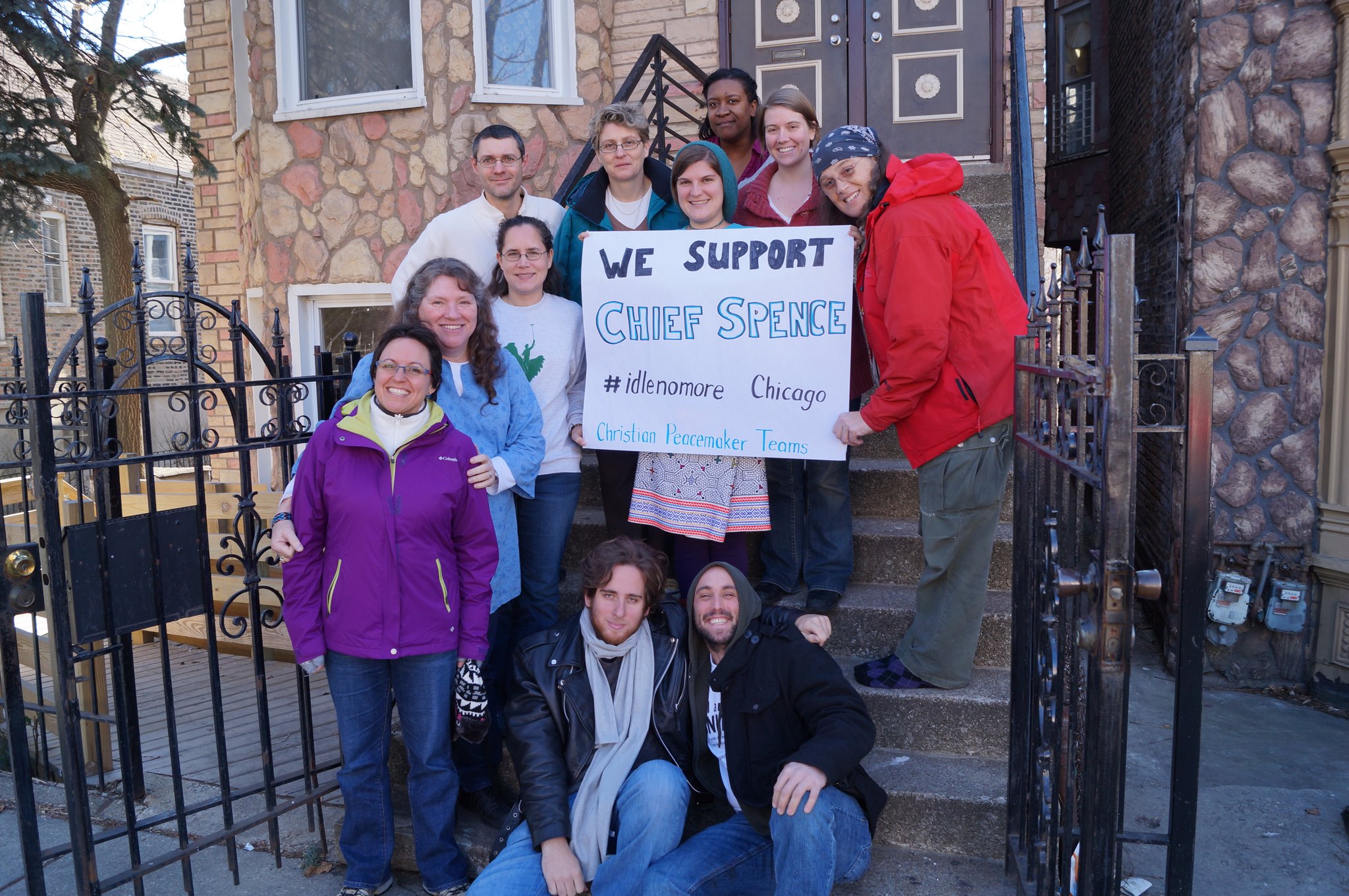
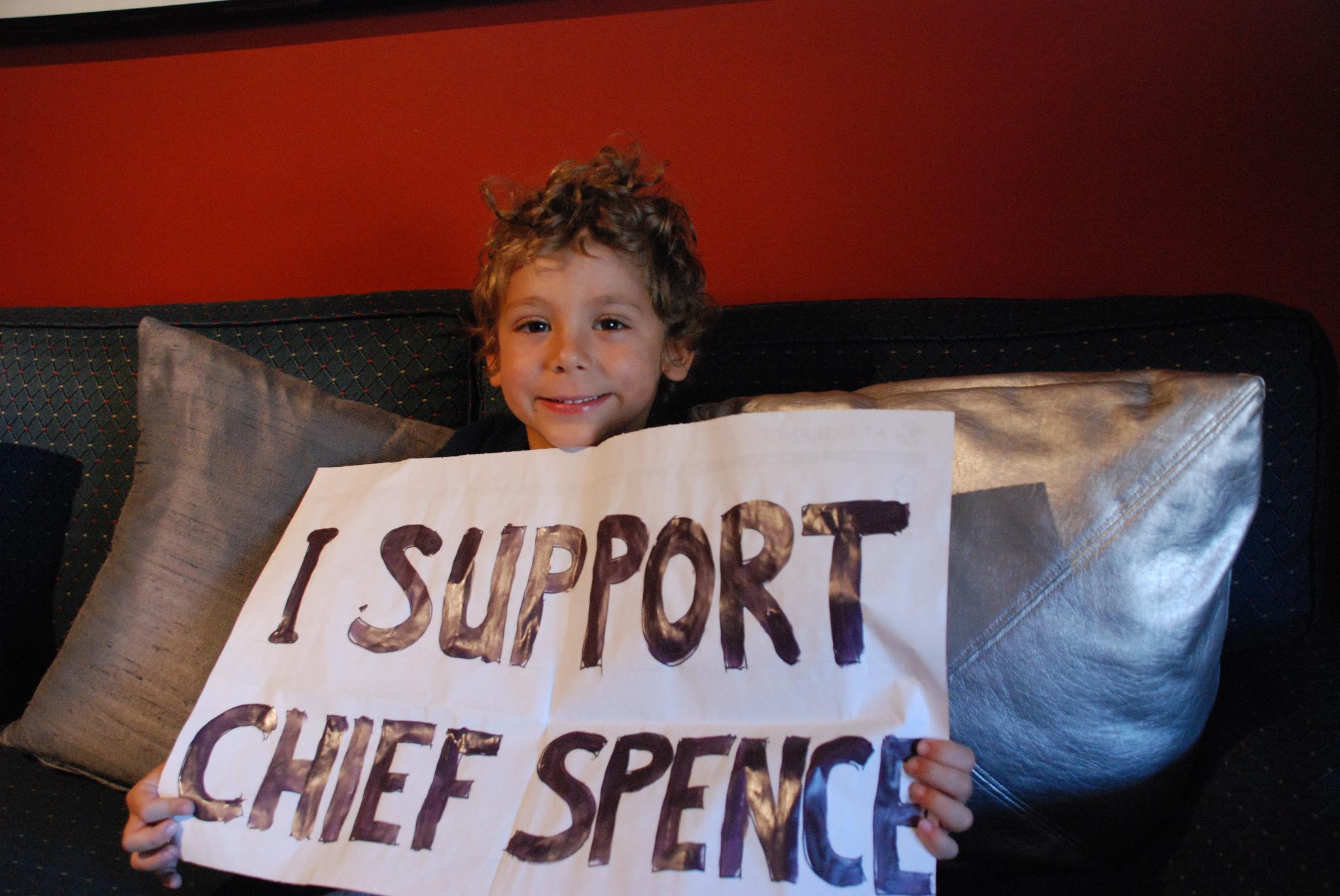
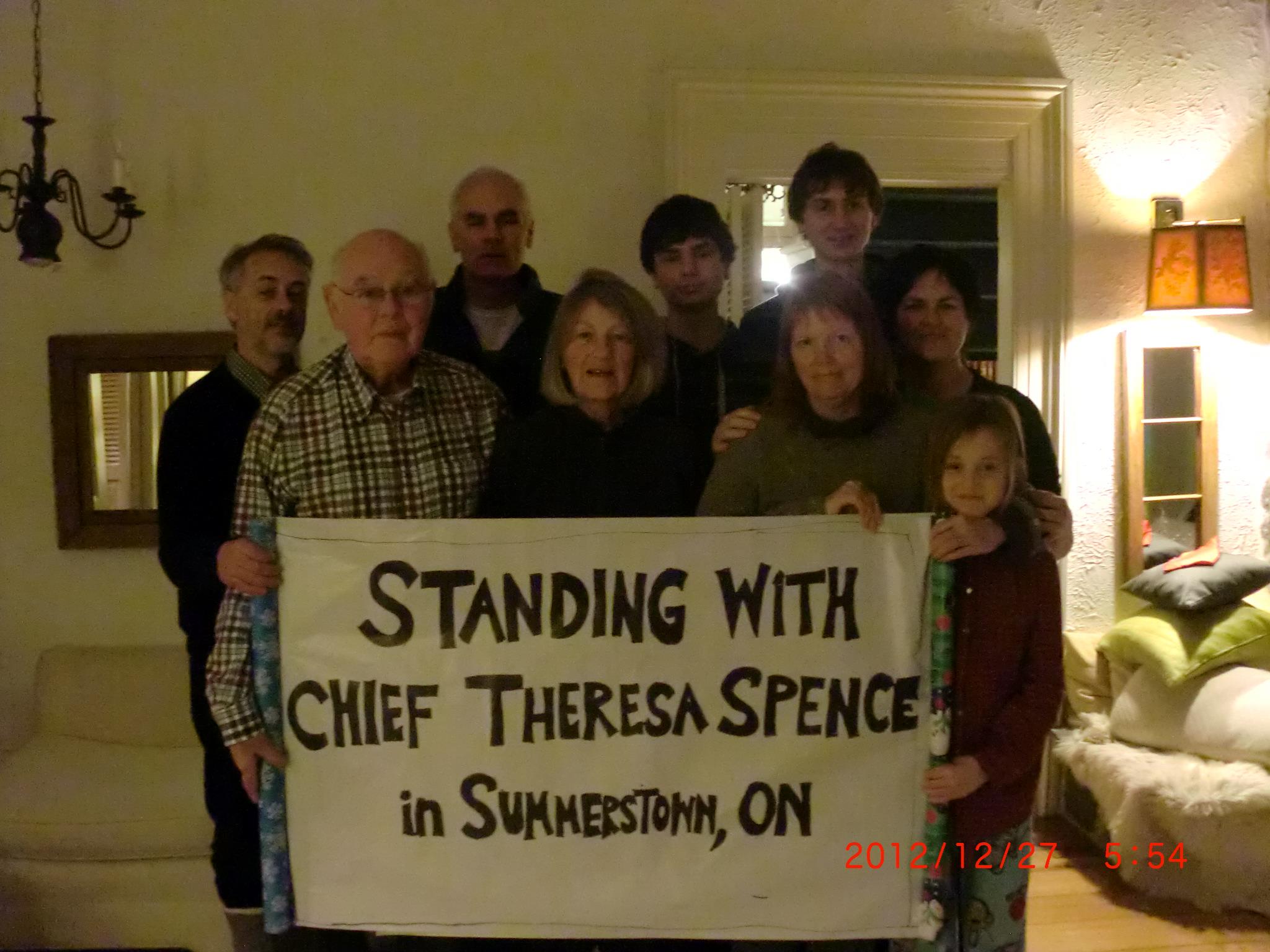
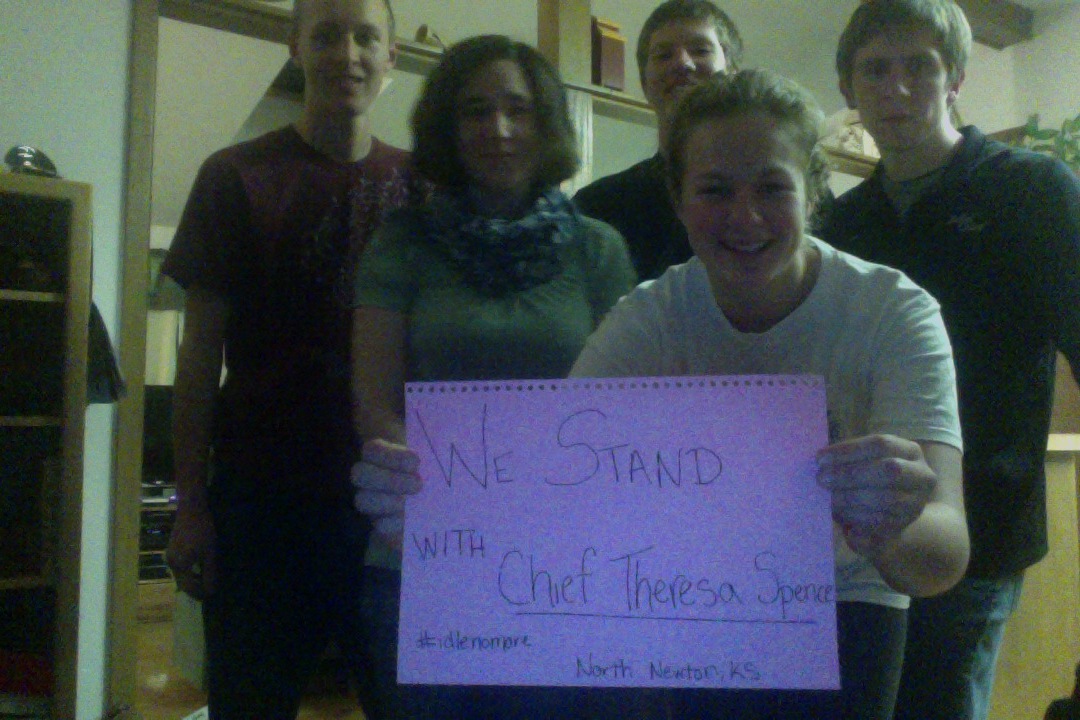
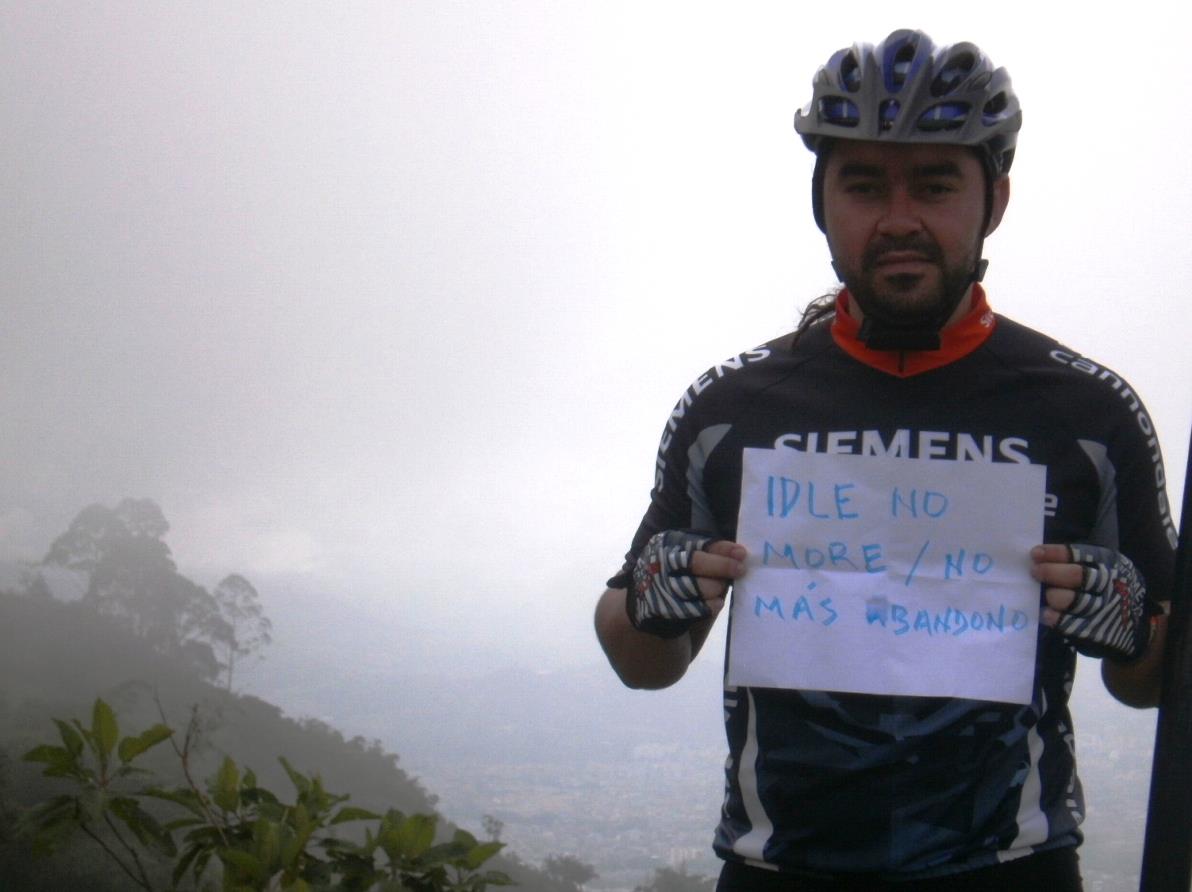
What follows is a homily I delivered in Leamington on Sunday April 14th on behalf of Christian Peacemaker Teams. The first six photos are from a recent CPT Outreach Initiative in Ontario. The remaining photos are from the CPT-AJT social media photo campaign, launched in support of Chief Theresa Spence during her 44 day sacred fast. The selected scripture passage is 2 Corinthians 5:14-21. I used an empty picture frame as a prop and reference. This blog post will be referenced in a forthcoming CPTnet release.

Stephen Jarnick of Peaceworks; CPTer Peter Haresnape; CPTer Chris Sabas; Interim Outreach Coordinator Sarah Thompson
On behalf of Christian Peacemaker Teams- the Aboriginal Justice Team, I want to thank all of you for providing me with this opportunity to speak to you this morning.
I am a full time member of the team, arriving from the US January 2012. We live in Toronto when not in communities. Our work is primarily based in Canada (or what I like to term the northern portion of Turtle Island), however, at times, projects and campaigns will take us south, to the States.
We are the Aboriginal Justice Team. However, there is nothing Aboriginal- or Indigenous/ Native- about us. I have a teammate from the UK, Colombia and Canada. I myself am from Iran and the first Iranian national to complete CPT training and to serve with the corps. I am a member of the Iranian Diaspora, longing to return to the homeland. I am now a naturalized US citizen.
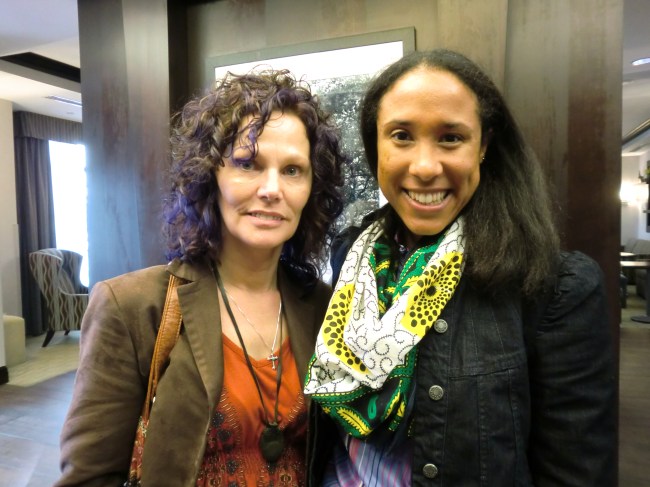
Penny Christiaans, Community Capacity Development Coordinator, Aboriginal Ministries Circle, The United Church of Canada; CPT Interim Outreach Coordinator Sarah Thompson
But that’s just the tip of my identity. I am an orphan, found as a newborn, and spent almost a year in an orphanage in Tehran prior to my adoption by white US parents. I am Christian. I am specifically named after Christ; knowing the basis for my name is one of my earliest memories. My parents and I were baptized together at a little community church in Tehran because my adoption- I- led my parents to their faith and so my full name: Christine.
We left Iran in the mid-70’s, prior to the Islamic Revolution. I was perhaps 18 months old. I have no memory; just stories, pictures, dreams and some trinkets my parents saved for me. The trinkets actually make up one cardboard box, affectionately known as ‘the Iran box.’ Just imagine: an entire country, history and culture in one old, dilapidated, worn out box (because that’s what it is: old and worn out…. the box that is).
Developmentally delayed, I was ‘behind the 8 ball’ with so many developmental stages and cognitive skills as a toddler, child and even teenager. For instance, I apparently had issues with my digestive tract and my stomach when I first arrived from the orphanage. This is still an issue for me today. Eating only recently has become enjoyable for me again after almost 3 years of a heightened increase of what has been a lifelong challenge. I also needed speech therapy for English. I didn’t begin to speak until a year or even more after what is customary.

CPT Steering Committee Meeting, Toronto
School was not enjoyable for me. I looked different (the black hair and olive skin thing), had difficulty speaking, and had a very basic vocabulary throughout. Sentence construction: forget it. Math: I could have cared less when the two trains that started at opposite ends of the continent, traveling at different speeds, with different fuel capabilities, would meet. I didn’t care because I couldn’t grasp the concept. I almost had to repeat First Grade (but for my mother’s persistence and advocacy for me in terms of needed, “alternative” approaches, I probably would have). Her advocacy was needed throughout my time in public school.
I applied to 23 colleges and universities. All but two rejected me, with one rejection coming from a community college. The acceptances: some “party” school in New England, and a small, private, Liberal Arts College, in central Pennsylvania, which saw something in the transcripts (it certainly was not the SAT’s as I kept to form with my ability with standardized tests, meaning “no ability”).
Quite incredible really that I practiced law, owning my own law firm, for nearly 10 years, prior to joining CPT. I now gravitate towards books and words; I’m simply a sponge for learning. My writing has attracted notice and praise. So too my “legal” mind and skills, both inside and outside the courtroom.
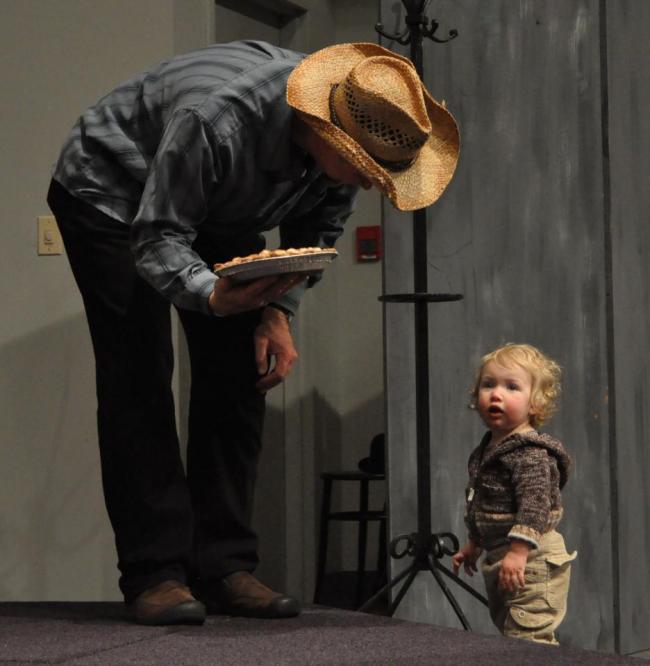
From Peace, Pies & Prophets, Toronto
I decided to go to law school because I wanted to help people, primarily immigrants. I did but I also became engaged in a totally unexpected field: juvenile law. For a time, I defended youth who were charged with criminal offenses, then became the court appointed guardian ad litem (child advocate) for children in family court, and then finally served for a time as the solicitor for the local children and youth agency. I met orphans, sexual abuse survivors, sexual abuse perpetrators, as well as advocated for terminating parental rights, or to keep a child within a residential placement or particular foster home placement. No easy task to be sure and despite the challenges and overall emotional toll, I still very much appreciate my time within the juvenile system.
But much more importantly than the titles, accolades and achievements, throughout my entire academic and legal career, I was blessed with the endless love, support and commitment from my mother. My white mother. My white, privileged, mother…..
I was asked to focus on children this morning as it relates to ‘Aboriginal justice.’ The first thought that came to mind was, probably not surprising, the church run/ state sponsored Indian Residential Schools. As I began to think on what I could possibly add to a much saturated topic, I could not help but to reflect on my own experience: both as an orphan, adoptee and intended juvenile/child advocate within “the system.”
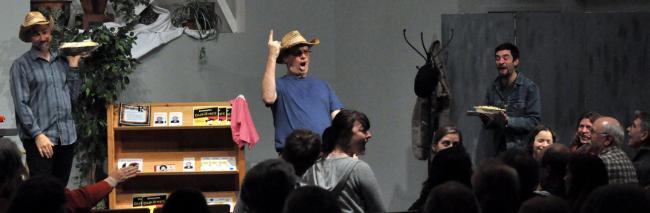
From Peace, Pies & Prophets, Toronto
And for now, I want to lift up my mother’s encouragement and support, especially during my time in the public school system, K-12. I’ll focus on aspects of privilege in a bit. My mother, despite her faults, limitations and imperfections, via her actions while I was in public school, is, in my opinion, the embodiment of this morning’s message: “For the love of Christ urges us on…”
Love nourishes the spirit. Love captures minds better than might does.

CPTer Chris Sabas; Penny Christiaans, Community Capacity Development Coordinator, Aboriginal Ministries Circle, The United Church of Canada
And speaking of spirit, the Second Letter of Paul to the Corinthians gives us the best picture of the spiritual struggle of an apostle in the New Testament. Paul is an evangelist and an apostle, but in the Corinthian correspondence we see what happens after evangelization. Between the lines of this letter, written to instruct and admonish the fledgling Christians of Corinth, we see Paul careworn yet working to live out a theology of reconciliation and transformation in the image of Christ.
So let’s review the situation. The letter picks up amid a stressful relationship between Paul and the local church, which he founded. He and the Corinthians have issues to work out before they can continue in ministry together. That work is the crucible that tests their Christian strength and ingenuity. We have the Corinthians’ side of the story only through Paul’s version of it, and he was writing not to us, but to people who knew the history. Still, we can see outlines of what happened.

We know from 1 Corinthians that these Christians were fumbling about as they sought to work out Christian discipline regarding food, sex, marriage and lawsuits. It would appear that Paul visited the church a second time after he wrote that letter, either to follow up on the charge of incest or in response to some other weighty matter. For whatever reason, the meeting did not go well. There must have been an unpleasant scene, because Paul left early, leaving sour feelings all around. Perhaps this gives some members of the church the impetus to listen to other gospel preachers and to question Paul’s authority.
From this letter, as well as from the letter to the Galatian churches, we know that many people evangelized and that some of them were apparently unscrupulous. Whatever it was, one crisis seems to have led to another. After leaving Corinth for the second time, Paul may have written an angry letter to the congregation (which is lost to history) instructing them to discipline an offending member. The offender could have been the man guilty of incest as reported in 1 Corinthians, or it could have been someone from a completely unrelated incident in which Paul or his authority was called into question during his second visit. Whatever happened, everyone was so distressed that Paul decided not to return to Corinth himself, for fear of having another problematic confrontation that would upset everyone again. Instead, he sent Titus to see what had happened and to try to patch things up. Paul was apparently distressed that he might lose this congregation to his apostolic competitors.
As it turned out, the Corinthians decided to obey Paul’s order. They disciplined their offending member so harshly that in fact, Paul had to admonish them (which is in 2 Corinthians) to rehabilitate him back into the church, after his punishment. We can see from this incident how difficult it is for congregations to discipline members when they step out of line. It is easier to gossip behind someone’s back than to administer weighty pastoral care. The question of intentional rehabilitation is just as important.

Theology, however, is not an armchair discipline, but arises from particular needs we face in life. Often those needs become apparent only in the midst of a crisis of some sort. Friends, I submit, we again, are in midst of a crisis.
For over three hundred years, many say European and Aboriginal peoples regarded one another as distinct nations in the land mass now known as Canada. But by the mid-nineteenth century, hunger for land had expanded dramatically and the economic base of the colonies shifted from fur to agriculture. Land and resources were needed and settlers began to view Aboriginal people as a ‘problem.’
The so-called “Indian problem” was the simple fact that indigenous peoples existed. They were seen as an obstacle to the spread of ‘civilization,’ and that is the spread of Western economic, social and political interests. Duncan Campbell Scott, Deputy Superintendent of Indian Affairs from 1913-1932, summed up the Government’s position when he said in 1920, “I want to get rid of the Indian problem. […] Our object is to continue until there is not a single Indian in Canada that has not been absorbed into the body politic, and there is no Indian question, and no Indian Department.”
By 1920, the “Indian problem” had been well “studied.” Listen to this portion of the Nicholas Flood Davin Report of 1879 which noted: “the industrial school is the principal feature of the policy known as that of ‘aggressive civilization’. [T]he Indians should, as far as practicable, be consolidated on few reservations, and provided with ‘permanent individual homes’; that the tribal relation should be abolished; that lands should be allotted in severalty and not in common; that the Indian should speedily become a citizen […] enjoy the protection of the law, and be amenable thereto; that, finally, it was the duty of the Government to afford the Indians all reasonable aid in their preparation for citizenship by educating them in industry and in the arts of civilization.” The reported concluded by noting that ‘Indian culture’ was a contradiction in terms, Indians were uncivilized and the aim of education was to destroy the Indian (as a “side note,” it’s worth noting the Harper government has proposed the total eradication of the reserves, with an eye towards private ownership of land and homes, effectively abolishing the tribal relation).
The intent of the residential school system was to educate, assimilate and integrate Aboriginal people into European-Canadian society. In the words of one government official, it was a system designed “to kill the Indian in the child.” The earliest was the Mohawk Indian Residential School, which opened in 1831, at Brantford, Ontario. The schools existed in almost all provinces and territories. In the North, the residential school system also took the form of hostels and tent camps.
The federal government currently recognizes that 132 federally-supported residential schools existed across Canada. This, however, does not recognize those residential schools that were administered by provincial/territorial governments and churches. At its peak in the early 1930s, it was a state-sponsored, church-run network of 80 schools with an enrollment of over 17,000.
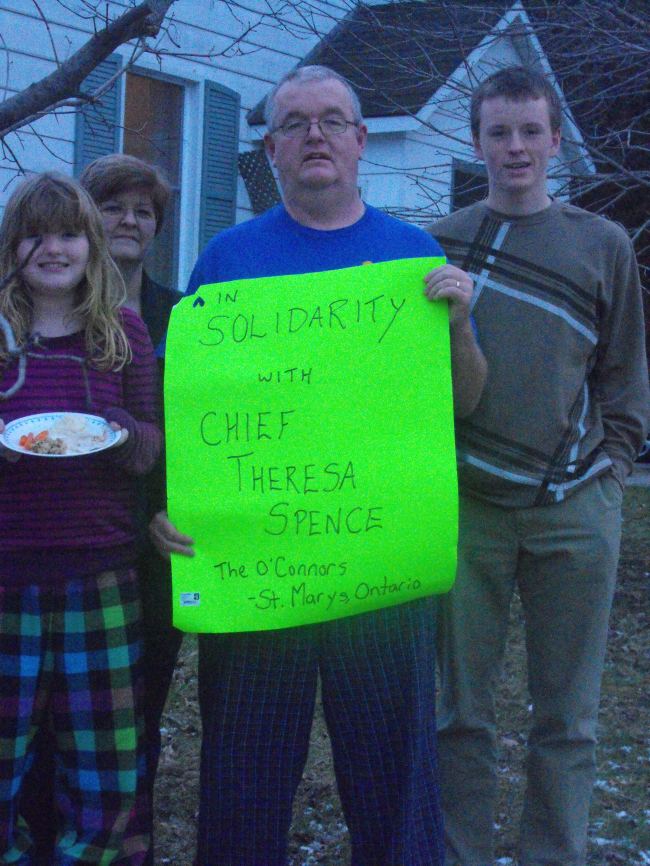
Attendance was mandatory for Aboriginal children to age 15. Failure to send children to residential school often resulted in punishment of parents, including imprisonment. Many Aboriginal children were taken from their homes, often by force, and separated from their families by long distances. Others who attended residential schools near their communities were often prohibited from seeing their families outside of occasional permitted visits.
Broad occurrences of disease, hunger and overcrowding are reported. The quality of education was low in comparison to non-Aboriginal schools. And we are now aware of the other horrors: sexual abuse, beatings, punishment for speaking Aboriginal languages, forced eating of rotten food, widespread hunger and thirst, bondage and confinement, forced labor, use of students in medical experiments and in too many cases, death.
However, I would like to note that some have spoken of positive experiences while at the residential schools. But, those traumatized by the well known horrific experiences in the residential school have suffered pervasive loss: loss of identity, loss of family, loss of language, loss of culture. Adaptation of abusive behaviors learned from residential school has also occurred and caused intergenerational trauma- the cycle of abuse and trauma from one generation to the next. Research on intergenerational transmission of trauma makes it clear that people who have suffered the effects of traumatic stress pass it on to those close to them and generate vulnerability in their children. The children in turn experience their own trauma.
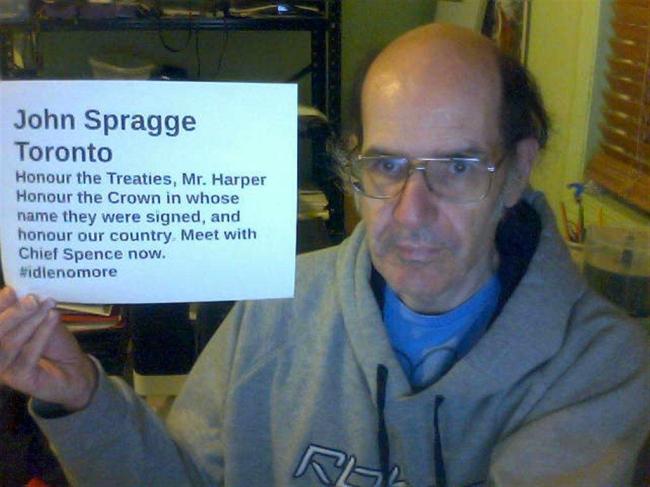
The system of forced assimilation has had consequences which are with Aboriginal people today. The need for healing does not stop with the school Survivors- intergenerational effects of trauma are real and pervasive and must be addressed.
And I’ll go further. Native children, presently in care, today, surpasses the residential school era. We are in what many call the Millennium Scoop. Instead of being at home with their parents, brothers and sisters, tens of thousands of First Nation children are in foster homes, staying with distant relatives or living in institutions. This is a culmination of decades worth of social ills: a disheartening mix of poverty, addiction, history and politics that have conspired to separate First Nations children from their parents. Researchers aren’t certain how many native children are no longer living with their parents. A study in 2005 pegged the number at 27,500 but since then, provincial and federal data, as well as empirical reports suggests the numbers have risen.
Former auditor general Sheila Fraser estimated First Nations children were 8 times more likely to be in care than other Canadian children. She pointed out that in British Columbia, of all the children in care, about half are Aboriginal- even though Aboriginals are only 8% of the population. Throughout Canada as a whole, Aboriginal people make up about 2% of the population, but between 10-20% of children are in care.
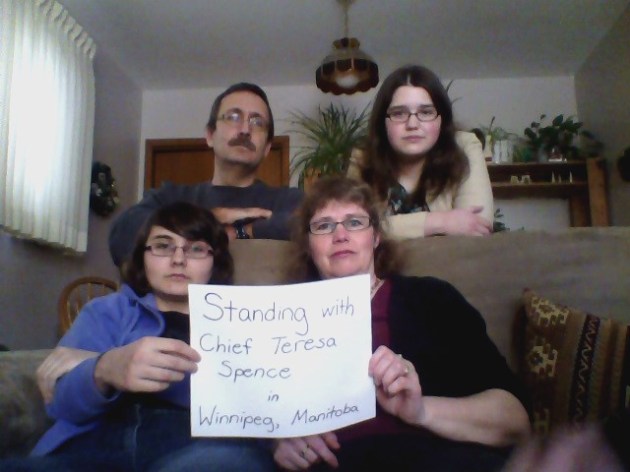
The National Anglican Indigenous Bishop, Mark MacDonald, has described our present reality as a “tsunami of need.” As if it can’t get any worse, suicide rates among Native youth is rising and, as described by Bishop MacDonald, are at ‘crisis levels.’
We may have a useful mirror if we return our attention to ancient Corinth. From the writings that remain, it’s clear that Paul understood some of the Corinthians as holding a triumphalistic view of the gospel that led them to be impressed with their own spirituality and to treat other believers as ‘less than’ themselves. From Paul’s perspective, the situation was approaching a crisis.
Second Corinthians was written by a real human being to real human beings in a particular place in a particular moment in history. The more we know about them, their world, their lives, and their issues, the more clearly we can understand this communication between the early Christians at Corinth and Paul.

It’s important to note the role of letters in Paul’s culture. In a world without high-speed communications or travel and in which travel was expensive and often dangerous, letters took on great importance. Letters were considered to “stand in” for the presence of the letter-writer. Teachers wrote handbooks to guide good letter writing.
Paul also wrote letters for specific reasons. Something was going on with him or the church or both that caused him to write, and he wrote to address what was going on. The letters do not contain general, abstract theological reflections but pastoral words addressing the occasion that prompted the writing. We must be careful, therefore, reticent even, about drawing abstract theological conclusions from Paul’s letters. We should also attend to Paul’s rhetoric. Paul was not concerned to report information objectively or toss out an opinion for what it was worth or some other such effort. He wanted to persuade the Corinthians to see a situation as he did and to act as he believed they should. Rhetoric is the disciplined art of persuasion and was highly valued in the ancient world. Paul’s letters are highly rhetorical. If we pay attention to the rhetorical strategies and devices Paul uses to argue his case and bring the Corinthians to his side, we can understand more clearly the case he wished to argue.

We also need to keep in mind that these first Christians were figuring out how to live as God’s alternative community in the midst of the patriarchal structures and imperialist values of the Roman Empire without a New Testament or long-standing Christian traditions to guide them. Debate was inevitable. Those with different perspectives from Paul and from one another were not necessarily “bad guys.” Rather, they were part of a legitimate and necessary struggle to understand how to be faithful to Christ in their time. In many ways the Corinthian letters are as much the Corinthians’ story as Paul’s. Too often we caricature and stereotype those who disagreed with Paul rather than appreciating their role in this new movement. And you know, too often we caricature and stereotype those with whom we disagree in our own churches. Perhaps learning to practice such an interpretation as we read Paul can be a step toward learning to practice it in our faith communities also.
In such a time as the present, our Corinthian forebears in faith may be able to help us. The first lesson they offer is this: when diverse people come together around their faith in Jesus as the Christ, conflict is inevitable. Sometimes we might think that the earliest Christians had an easier time than we since they were closer to the events of Jesus’ life when the fire of the Spirit burned brighter. The Corinthian story reveals how romanticized such a view is! From the earliest days of the Christian movement, we see that a shared faith in Jesus did not prevent real human differences from erupting into conflict. The same is true today. And indeed, a shared faith in Jesus does not prevent egregious harms from being committed, by those professing faith in Christ.
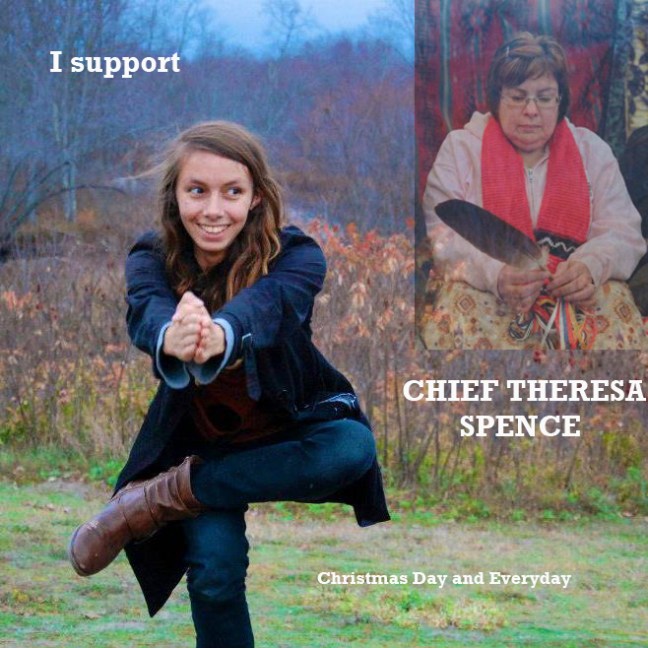
The question then for Christians, therefore, is not, “Will there be conflict?” but rather, “How will we respond to conflict?” The Corinthian letters, and 2 Corinthians in particular, tell the story of conflict among Corinthian believers and also between Paul and some Corinthian congregants. We can watch and learn from them.
2 Corinthians contains Paul’s spirited defense of himself. In fact, in the last three chapters we see his anger seep out. He is grappling with his fear that the troubles in this congregation could harm his ministry elsewhere, because they could damage his reputation. But he is doing much, much more than venting his frustration. It is no accident that the teaching on reconciliation that is the heart of the meaning of Christ’s death finds its most beautiful expression here. He is calling his new Christians, and himself, into a higher spiritual space, above their petty quarrels. Paul is big enough to see his own weaknesses and mistakes in judgment, sure enough of his call not to back down, and strong enough to take the heat. He is interpreting Christ as much for himself as for the Corinthian Christians.
Reconciliation is the result then of the maturity they, together, acquire in Christ. “For the love of Christ urges us on.” This is perhaps one of the most powerful phrases in Scripture. It vividly amplifies that Paul considers himself an apostle, but not of his own accord, but by the will of God. This is true of all Christian vocation; we do not seek, but discern it, then follow as the way opens to us. This phrase is the key to a great secret that Christians discovered and that the Roman world had no access to: love, not military occupation, compels allegiance. The use of force or the threat of punishment seeks to break the spirit, while love nourishes it. Our responsibility then is to teach the world that love, not might or power, transforms.
To continue, the message of the cross- again that love captures minds better than might does- and that Christ’s love revealed by his death, rather than threat of punishment, brings us to know God and to see one another afresh and in a new light. The gracious act of Christ in dying for the human species should always teach us that no one is above another. This we cannot keep to ourselves. Its point is to transform the world. We are participants in Christ; in other words, as Christ’s ambassador, we are to advance the work of reconciliation. God’s appeal is made through us, apostles as Paul was: not of our own accord certainly, but by the will of God. Being a Christian is not just about following commandments- but is about letting Christ take possession of our lives and transforming them.
We cannot live as before. Behold a new quality of living. Menno Simons commented on this text passionately: “[God] has roused us from the dead and led us into life…For we feel His living fruit and moving power in our hearts as may be seen in many places by the lovely patience and willing sacrifices of our faithful brethren and companions in Christ Jesus.” Menno expounded the newness of life that comes from participation in Christ.
Through the 2008 apology to the survivors of the residential schools, in which Prime Minister Harper called the schools a ‘sad chapter’ in Canadian history, and with the launch of the Truth and Reconciliation process, Canada is seeking to address the injustices of the past.
But just as we need to understand and orient ourselves to the Corinthians and Paul of the ancient world, we need to orient ourselves to our indigenous sisters and brothers: know “their world”; “their lives”; “their concerns.” We simply need to listen; we’ve been dictating and gabbing for 500+ years. Then, and only then, we can more clearly understand and begin to conceive of our responsibilities as the ambassadors of Christ. Then and only then will we no longer think of them and us, or us and them, but truly as sisters; as brothers. The New Age that Paul envisioned in his plea for unity would indeed be upon us.
What do we need to understand? It’s simple: we are not talking about some distant past. Trespasses continue. We need to work, now, to avoid perpetuating the cycle of discrimination so our children are not left having to apologize for our mistakes.

I now invite you to join and put yourselves in the picture- to commit to act for truth, reconciliation and equity. No doubt, all of us have in our minds pictures and ‘freeze frames’, either from history or from recent events, of all that is “wrong” in Canada’s relationship with Indigenous peoples. But what do you picture when you think on the future of equity and justice that we sincerely seek?
[empty picture frame] Let’s picture it. Let’s try to move beyond abstractions. What snapshot could be inserted here? What would just relationship look like?
To live in right relationship, for today, let’s focus on language and I’ll return to the residential schools of the recent past. We are not talking about students- but survivors. Students are not forced from home and the arms of their mothers by the Royal Canadian Mounted Police in the dark of night, prohibited from speaking their native tongue, or required to pray to a deity by the name of Christ and God several times daily…. I was a student; a student faced with many challenges to be sure, but a student. Not, a survivor.
…Privilege. We, those of us here today who cannot claim indigenous or native blood, are privileged. By that simple fact alone: our blood is not “red.” Although Canada consistently ranks as one of the world’s best countries to live in, applying the same criteria to Indigenous peoples, Canada falls to around 60th place. We need to address this gap so that we do not have to apologize again. The Canadian government’s apology will mean so much more if Canadians end the cycle of inequity that Indigenous peoples face in education, health care and social services.
Please know, I am a long term visitor. I live in Canada. Before that, I lived in the States, so all within Turtle Island. I stand before you apart of this privileged class. My hair is black; my skin is olive, but my blood is “white.” I am not indigenous to Turtle Island. I act “white.” I speak “white.” Some in the Iranian Diaspora do not consider me Iranian; just this past year, an Iranian told me that I “am not a good Iranian.” Thus, I am a Westernized, educated, feminist woman. I am Christian or as I prefer to say, a Follower of The Way. My white mother, who loved me to the ends of time, had the ability to consistently fight for me during public school.

Yes love is part of the equation, but if we are to take our roles as ambassadors for Christ seriously, recognizing privilege is key too. I am in no way suggesting that all white people are living the life of luxury with immense power and influence… let’s keep this in context. How many native mothers loved their children; the children who were ripped from their arms by the Mounties? The Indian Act, still in effect today, has gone through countless amendments and changes. At one point, indigenous persons could not leave the reserve unless they received permission from the appropriate government agent. In effect, they needed a hall pass. This was at the height of the residential school genocide. Parents could not even leave to begin to look for their children. Love was simply not enough.
Let’s continue. Remember we are focusing on language…. Christian Peacemaker Teams- the Aboriginal Justice Team. How dare we, ‘eh? We consider ourselves allies, committed to the cause and lifting up the voice of the indigenous communities who have invited us in their circle. Recall no indigenous or native person serves on team. Dr. Lyn Gehl, Algonquin Anishinaabe-kwe from the Ottawa River Valley wrote a blog entry in February, in which she analyzed allies who wish to align themselves with Indigenous peoples. While she recognizes alliances are needed, she simply does not trust alliances led by “white” people (or men, even Indigenous men).

I am referencing white with quotes; she did too. She says, “[M]y preference here is to say “white people” because after all we are all Indigenous to the earth and we all have Indigenous knowledge that we need to go back to. I certainly don’t say white people as an insult.” She continues: “Don’t get me wrong, it is great to know that other people and political organizations understand that solidarity is key. But I also know full well that unless “we” stand behind the people most oppressed “we” will not gain the solidarity needed. This is because the people most oppressed need to know that when the people who are less oppressed get what they need and want- whatever that is, like getting rid of Harper in the next election – that they will continue to stand behind their needs rather than drop their needs.” So what would our name change look like?…. I have no idea. I’m just asking, I don’t have an answer today.
To start to live in right relationship, I suggest we look to where this “began”: the children. The youth. And keeping in mind the words of Dr. Gehl, let’s get behind a group of indigenous youth. I put in this picture frame a photo of the original 6 youth who set out on The Journey of Nishiyuu. This didn’t receive much “main stream” coverage.
For a bit of background, according to Cree legends, in a time before humans came to being, all creatures in the natural Kingdom foresaw the birth of a new species that would one day roam the Earth. They referred to this new species as “Nishiyuu,” which literally means human beings. However, the term has a complex and much deeper meaning, which include the interconnectedness of all life, as well as the oneness of time within which all life begins and ends. This community continues to call itself the ‘Nishiyuu’ (human beings), to distinguish themselves from their relatives in the Natural Kingdom. They add the term could be said to include reference to all humanity.
6 Youths from the community of Great Whale, located in Northern Quebec on the shores of Hudson’s Bay, commenced a sacred quest January 2013. They walked to Ottawa, a journey totaling over 1500 kilometers, in the “dead” of winter with frigid temperatures and deep snow, to deliver a strong message to other First Nations across Canada that the Cree Nation of Quebec are still present and true keepers of their language, culture, traditions and that they continue to respect the sacred laws of their ancestors. By the time they reached Ottawa at the end of March, the walkers grew to a caravan and were joined by hundreds of people, indigenous and non-indigenous, in Ottawa.

I said I wanted journey back to where this began: the youth… but also to the land. The residential school policy was just one major land and resource grab. Remember Duncan Campbell Scott: to absorb into the body politic, to destroy the collective unit. Harper’s initiative to eradicate the reserve system is simply the continuation of wanted unfettered access to countless resources. Thus the Journey of the Nishiyuu reinforced their traditional trade routes and emphasized the fact that they never surrendered their land. “This land, the earth, the rivers, the winds, the mountains, the clouds and all of the creation, we are the true keepers and will continue to do so until time on earth is over.”
I conclude with a portion of their initial press release: “By facing these challenges that our people are subjected to everyday, our youths will reinforce the traditional bonds that existed between the Cree Nation and our historical allies by restoring the traditional trade routes that linked the Cree, Algonquin, Mohawk and other First Nations throughout Turtle Island for the betterment of future generations. […] The time to stand united is now, we support the Idle No More Movement and respect the duties entrusted upon our Leaders. Through peaceful processes, unity and proper negotiations, we can solidify our rights to ensure the earth and our way of life will be fully protected forever. […] The Ancestors will walk with them. Creator of all things, the Giver of Life and the Spirits of the earth, please watch over them and return them home safely. They left as young men to carry the heaviness and emptiness that surrounds us all, but they will return home as Great Men[!]”
…. Let the words of my mouth and the meditation of my heart be acceptable to you, O Lord, my rock and my redeemer (Psalm 19:14). Amen.















 persia37