Archive | Christianity RSS feed for this section

Lost and found

18 Sep
(Following the assassination of Charlie Kirk, New York City’s Young Republican Club organized and gathered in Madison Square Park in Manhattan for a vigil in support of the conservative activist. Andrea Renault/STAR MAX/IPx/AP Images)

This post is a homily I delivered to the parish I currently serve as “Deacon Vicar,” St. Andrew’s Episcopal Church, Somerset Parish, Princess Anne, Maryland on Sunday, September 14 which was the Fourteenth Sunday after Pentecost, Proper 19.

The Collect of the Day: O God, because without you we are not able to please you, mercifully grant that your Holy Spirit may in all things direct and rule our hearts; through Jesus Christ our Lord, who lives and reigns with you and the Holy Spirit, one God, now and for ever. Amen.

The Lectionary readings: Jeremiah 4:11-12, 22-28, Psalm 14, 1 Timothy 1:12-17 and Luke 15:1-10.


I had a distant uncle (very distant!) whom I met once when I was a teenager.  That was on a trip of a lifetime, which I had zero appreciation for in the moment.  It’s one of those experiences that cannot be replicated.  During the summer in between my sophomore and junior years of high school, my mother, partner and I took a month-long train trip out west.  I know Amtrak has a horrible reputation (a lot of which is ‘deserved’) but if you ever have the opportunity to take a long train ride within the United States, I highly recommend it.   It’s a great way to see our country!

At the time, I was missing my friends, worrying I was going to miss out on something (that was the kind of teenager I was).  My mother and I have recently been ‘revisiting’ that trip, because she routinely goes through our photo albums and brings out photos to show me and guests who happen to be visiting (like what happened at the recent healing service, with that baby picture appearing in a recent Andrewgram).  The pictures of course cannot capture the magnificent, majestic landscapes we are blessed to have.  We visited the Grand Canyon, Yellowstone National Park, the Grand Tetons National Park, among other sites, as well as Salt Lake City, Utah.

That’s where my uncle (Uncle Stew) lived.  And he was a Mormon. He was a pleasant enough fellow.  I do not remember too much about him.  Unfortunately, most of what I remember is how he tried to convert all of us to the Mormon church!  He had us watch countless videos, took us to see some of the Mormon sites (we were not allowed into others because of not belonging to the church, or, at least that’s what he told us). 

(The Salt Lake Temple)

In light of Charlie Kirk’s assassination on Wednesday afternoon, and learning that the assailant, Tyler Robinson, is supposedly a Mormon, I thought of Uncle Stew.  There’s much about the Mormon church that remains a mystery to me.  At its core, however, is the Bible and profession of Christ as God’s Son, “who serves as the Savior.”  And so, I can only imagine the amount of “soul searching” that is currently happening, within Tyler’s family (also purportedly Mormon) and their faith community at large, regarding how Tyler became a lost sheep, who strayed from the commands of Christ, specifically, in this instance, the command to love his neighbor and not to kill or take another life. 

Unfortunately, however, there’s quite a bit of ‘clucking’ happening with respect to his family ‘needing to have done more,’ and the clucking is particularly focused on their failure to keep Tyler from straying and becoming a lost sheep.  But there’s also clucking directed at Charlie Kirk, for either opinions expressed, or regarding the ‘type of faith’ he led and professed.  The crux of all this clucking wants us to acknowledge how much both – Charlie and Tyler – need/needed to repent, and to be counted again amongst the righteous, as both were….. lost sheep.

Before Kirk was killed, I was reminded of the thief on the cross, who hung next to Jesus at the crucifixion, by way of one of my daily devotional books.  As I have watched the horrible social media comments pile here, there and everywhere, I frequently re-read the quote since Kirk’s assassination.  It comes from Makarios the Great, a monk in Egypt, who lived in the fourth century. Because today in the Roman Catholic Church is the Feast of the Exultation of the Holy Cross, known as Holy Cross Day in the Episcopal Church (which is transferred to tomorrow since today is Sunday, which takes precedence in our tradition) I want to share it.  Here’s what St. Makarios wrote:

All things are possible for God.

Such was the case of the thief [on the cross].

In one moment he was converted through his faith

and was restored to paradise.

It was for this that the Lord came,

so that he might change our souls, re-create them,

and as scripture says,

“make us sharers in the divine nature.”

He will give to our soul a heavenly soul,

which is the Holy Spirit,

who will lead us into the fullness of virtue,

so that we will even start to live the eternal life,

as far as this is now possible.Makarios the Great     

Technically, the thief was a not a lost sheep because prior to that moment he had not professed faith in Christ and it’s a conversion story.  But he and those who are lost sheep have one important, very important act to do, before coming or coming back into the fold: profess the Holy Name of Jesus and/or repent, Confess.  But each time we confess, for me, we truly do profess the Holy Name of Jesus.  We’ll shortly pray our Confession with a profession: for the sake of your Son, Jesus Christ, have mercy on us and forgive us….

Clearly, Tyler needs to do some hard, hard work.  I do pray some sort of prison ministry awaits him and that his heart will unharden.  I know it’s hard, but Tyler needs our prayers.  Even if the shooter ended up being a different race or was indeed part of the transgender community, our prayers are still required.  We are to pray, unceasingly, even when and especially when hearts remain hardened.  It’s quite possible Tyler and even Dylan Roof (the Charleston, Mother Emmanuel shooter) will eventually be part of the fold. Think about that(!).  If (…big if…) Dylan Roof truly does the hard, needed work, Professes and Repents/ Confesses, even after methodically killing 9 unarmed African American Bible study attendees, he would be our brother in Christ.  That’s an uncomforting, unsettling thought.  But to authentically proclaim, may have us be unsettled, uncomfortable, out of our comfort zones (think back to my recent homily about Jesus coming to ‘cause division’).     

And Charlie Kirk?  Well…not doubt it’s going to depend on your perspective and how you perceived him.  Remember this: he professed Jesus and yet, like us, all of us, was a sinner.  The church is comprised of sinners, weekly we confess our sins, because as we prayed in this morning’s Collect, without God, we are unable to please him without the grace of the Holy Spirit.  Because we too can get lost.  You may want to check your bearings; Jesus may indeed be out looking for you right now.  Ask: am I the lost sheep?  We cannot pretend to know what was further required of Charlie Kirk when called to account at the last Great Day, which, unfortunately, for him the last day was this past Wednesday afternoon at around 2:20 p.m. EST.  

I’m a member of the LGBTQ+ community.  I admittedly did not pay too close attention to Charlie Kirk because he and I had differing takes with respect to “the gay issue.”  Even with that, I do feel confident he would have sat down with me to have a conversation in the same way Pastor Timothy Keller would have (I spoke about that in a homily that focused on Timothy Keller when he died).  While I do take issue with “love the sinner, hate the sin” ‘approach’ with respect to ‘the gay issue[1],’ I want to highlight two areas of misconceptions that I stumbled across since Kirk died because I’m frankly beyond sick and tired of watching on my phone or laptop someone getting shot and then dying, with having to then watch a wave of celebration erupt after the person dies.

Too many in the ‘celebratory camp’ shared a portion of a quote from Kirk and it was not flattering.  As is usually the case, the entire quote was not shared but clipped.  The quote: 

[clipped quote “I can’t STAND the word empathy, actually. I think empathy is a made-up, new-age term, and it does a lot of damage.”] But the full quote continues “I much prefer the word compassion, and I much prefer the word sympathy. Empathy is where you try to feel someone’s pain and sorrows as if they’re your own. compassion allows for understanding.”  Our Christian canon (NT) was written in Greek; there is an underlining Greek word for empathy, but it’s fairly modern, coming I believe from the field of psychology.  So, I would not necessarily frame empathy as ‘new-age’ but yes, many Bible translations have Jesus being moved with pity… or compassion.

As for ‘the gay issue’: just after Kirk was killed, a gay African American conservative political activist (also a highly decorated Army combat veteran), Rob Smith, shared about a scary, vile experience he had to endure at an event.  Charlie Kirk was there.  From how Smith wrote the description from the evening, even with being an Army combat veteran, he was quite shaken and perhaps scared.  Charlie came to his defense, saying to him: “God loves you, you are a part of this movement, and we’ve got your back.”  I believe since that night, Smith has left the Republican party but still remains committed to conservative causes (though those who know me know that I do not like using these type of labels, i.e. conservative/liberal etc., because it’s now much apart of our polarization and division. But I also know we need to be able to communicate with having a field of reference and that’s why I chose to us the partisan label). He has had multiple posts since that sharing, grieving Charlie Kirk’s death, and condemning the celebratory posts. 

(From Rob Smith’s Facebook page.)

So, again, who is lost?  Who is Jesus looking for?  If you think you know, then I encourage you to get out your compass (Bible), check your bearings, spend some time with God, and maybe even look over your shoulder…Jesus may be walking towards you, looking quite worried.  Because there is joy in the presence of the angels of God over one sinner who repents.

In honor of the Feast of the Exultation of the Holy Cross (Holy Cross Day):

We adore you, O Christ, and we bless you,

because by your Holy Cross you have redeemed the world.

Amen. 


[1] Meaning, when I finally came to peace with who I am (not what I am) it was due to what we see in Psalm 139 and the beginning of Jeremiah: “For it was you who formed my inward parts; you knit me together in my mother’s womb. I praise you, for I am fearfully and wonderfully made.”  For me, God does not make mistakes.  And as I have stated in a prior homily, I do struggle with aspects of the transgender issue (i.e. permitting children under age 25 to begin the process and permitting sports competition in the claimed gender preference) but I personally know folks who are transgender and remain in dialogue and conversation. 

Election 2024: The Day After

6 Nov

The following is an email I sent to the parish I serve:

Good morning saints!

While we desperately need the rain, I am quite grateful the sun is shining today. My day started as it always does: feeding our six outdoor cats at 6am (after feeding our three in-door cats, who of course think they are nearing death due to not eating since the night before). Admittedly, there are days where I miss my ability to sleep a bit longer. Even with that, I do enjoy being outside, walking around in my yard at that hour. I am quite blessed to have a forest at the edge of my yard. So, it’s quite beautiful and serene to be outside at that hour, to witness the various aspects of God’s creation stretching, yawning and waking up.

I did not burn the midnight oil last night with the election returns. It was quite clear to me by the time I went to bed who was going to win. The only question remaining was the extent of the victory with respect to the legislative branch; that seems to remain unclear as I write this. But before I began my morning devotions, I spent time on social media, which is something I usually do not do. And I saw the hurt, fear and anger that has been expressed by some members of our beloved community. And I saw the counter celebratory response.

My hope going forward is that all of us remember Paul’s counsel from his letter to the Romans: “Rejoice with those who rejoice, weep with those who weep. Live in harmony with one another. Do not be haughty but associate with the lowly…If possible, so far as it depends on you, live peaceably with all.”

During my morning devotions, I was reminded of the Little Sisters of Jesus. That community’s beginning can be traced to Charles de Foucauld and his seeming failure of establishing a new kind of contemplative life, rooted in the world of the poor and based on the “hidden years” that Jesus spent as a carpenter in Nazareth. In his hermitage in the Sahara, he had conceived of a “fraternity” of men and women who would live among their Muslim neighbors as brothers and sisters, embracing poverty, manual labor, and a spirit of prayer. They would proclaim the gospel not with words, “but with their lives.” For many years Foucauld had patiently prepared the way for followers who never came. In the end he died alone, his message bequeathed to the appreciation of a later generation.

Fast forward to Madeleine Hutin. She came across Foucauld’s biography and the rest as they say is history. She left for Algiers, with few plans if any, determined to trust herself entirely to divine providence. She eventually was able to form the order, the Little Sisters of Jesus. The word “Little” had special meaning for Madeleine, now known as Little Sister Magdeleine. During the early years of her vocation, she had experienced a number of intense visions inspired by her meditations on the Infant Jesus. The humility, weakness, and vulnerability of a baby were the disguises under which the world’s savior first appeared. And it seemed appropriate to her that this baby should also be the inspiration and model for those who wished to bear witness to divine love among the poorest and most powerless of the world.

I encourage you to read more about the Little Sisters of Jesus. Recently, I have been reflecting quite a bit about Foucauld’s witness for reasons I will not detail here, other than to say that Foucauld is just another example included in that long list of those saints I referenced in my election eve note to all of you: he kept going, even when it seemed he was an utter failure. It is my fervent belief that we will rarely see the fruits of our work. And as I detailed in my Monday evening email, St. Andrew’s will continue our work and proclamation within and for the Princess Anne community as the Spirit leads us.

Regardless if we are doubled over in fear or in a celebratory mood, we can also spend time reflecting on Little Sister Magdeleine and her witness. Advent is just around the corner (I know, where has the time gone, right?!). We will again pause as much as we can the busyness of the time to ponder the significance of the coming of God by way of a weak, helpless, suckling babe, lying in a filthy manger, among animals and fleas, within view of the opulence of the grandiose power structures of its day. Some time ago, I read a reflection detailing that Jesus was born within full view of one of Herod’s (the State’s) “White House” of Bethlehem; meaning, the contrast could not have been starker. God did not choose the White House of that time-period to come bursting forth upon the scene. God was quite deliberate in placing him over and beyond the human made power structures. Grant it, Herod was not elected. But we do have a constant theme running throughout Holy Scripture: not by might, nor by power, but by Spirit (Zechariah 4:6).

As I have previously stated in at least one past homily, I lament how politics has become the country’s chief religion, with political candidates propped up in a divine type way, as the designated savior, regardless of party. Many have tried to peg me within secular ways of thinking with respect to our politics in trying to figure out where I land. The secular way of thinking is not my way of thinking, though of course, I have opinions, desires and fears as well. My way of thinking tries to imitate Christ, to transform dualistic modes. Like Christ, that at times includes soothing, pastoral language, at other times, righteous indignation, anger, and language that startles. But with all of that, may we remember we have one savior, who is timeless, beyond elections, who is, who was, and who is to come. And I do not mean to degrade or diminish any of your feelings nor do I think of myself as a cynic. I do think we are to be engaged and look to the welfare of the city (See Jeremiah 29).

But as we talked about during our recent study of Amos, we need to look beyond Washington D.C. or Annapolis to perceive what was very much apparent that cold, starry night in Bethlehem to those who were open (the shepherds… who were not among the power brokers of the day) to seeing beyond the extravagance of marble structures. Because that’s the area where we need to give our reverence, worship, time and treasures.

It is fitting that Sunday’s OT lesson is from the first book of Kings and Elijah. You may want to spend time with the second book, chapter two, when Elijah ascends to heaven and Elisha is anointed his successor. This is the type of succession story that Jesus comes from. Elijah’s ascent to heaven is another stark contrast to the report of the royal succession story – a story of failure and disaster – to take us to a scene alive with the news of divine initiative. Elijah’s departure and Elisha’s appointment suggests that God continues to put into play initiatives that can break open patterns of defeat and disappointment. Included with Elijah and Elisha are the company of prophets. Elisha represents the teachings of those who, like his mentor Elijah, value the old religious traditions of Israel (the worship of Yahweh, God of Israel, alone) and the old political traditions (the egalitarian vision of old Israel). The text gets at the importance of communities that can discern faithfulness in public life and policy. From these communities, God calls forth prophets. God forms communities that sustain and sharpen those faithful to God. And fast forward to the Babylonian conquest and exile…who was spared deportation? The “people of the land.” Some suggest that the “people of the land” are the segments of society as represented by Elijah and Elisha, those outside the power structures, those who were not the elites or wealthy.

We at St. Andrew’s are called. We are givers, we are faithful stewards, we are saints. That will remain as long as this ‘red wave’ exists and it will continue to be so once the power pendulum swings back and produces a ‘blue wave.’ Because we are Christ’s wave.

“Finally, beloved, whatever is true, whatever is honorable, whatever is just, whatever is pure, whatever is pleasing, whatever is commendable, if there is any excellence and if there is anything worthy of praise, think about these things. Keep on doing the things that you have learned and received and heard and seen in me, and the God of peace will be with you.” – Philippians 4:8

in the name of Love

7 Apr

I haven’t posted anything in quite some time. What follows is my sermon from Maundy Thursday 2023, delivered in my capacity as an ordained deacon in the US Episcopal Church (though I didn’t read every single quote from Hadewijch as that would have been too long). Sources include: Give Us This Day: Daily Prayer for Today’s Catholic; All Saints: Daily Reflections on Saints, Prophets, and Witnesses for Our Time (1997) by Robert Ellsberg; and the teachings I have received thus far as a vowed religious sister (Novice) with The Communion of the Mystic Rose. The above image is from Star Wars: Andor.

————————————————————————————————————————————————————-

Jesus commands us to love, not by our own definitions of love, but by his. On this night, even as the atmosphere darkens, even as death draws near, even as Jesus foresees his own agony and the amount of courage he will need to muster, he first spends time caring for the most basic needs of his friends. The need for food and drink. The need for refreshment and rest. The need for touch and intimacy.

When Jesus washes feet, he shows us that love does not have to look glamorous to be revolutionary. In fact, it’s often the humblest acts of love which speak the loudest. . . . I probably said this last year, but for me, tonight is the most overwhelming of the Paschal Triduum liturgy; yes, even with Jesus’ excruciating, painful death on the cross… we just have so much to absorb this evening, within a closing, swirling darkness.

In preparing for this evening, I was reminded of Hadewijch of Brabant, who was a Flemish Beguine Mystic in the middle of the thirteenth century. Almost nothing is known of her life. Although a prolific author, she inspired no contemporary biography; all that is known of her story must be inferred from her letters and other extant writings. The Beguines were a fascinating movement, which flourished in the Low Countries in the thirteenth and fourteenth centuries, attracted women to a new form of community-based religious life, distinct from the alternatives of marriage or traditional enclosure. The Beguines stressed the value of prayer, the works of mercy, simplicity of life, and an affective spirituality focused on the humanity of Jesus. It seems that Hadewijch may have occupied a position of leadership in one such community.

Hadewijch’s teachings are contained in letters of spiritual counsel, a great body of poetry, and a series of recorded “visions.” The visions describe a number of revelations in which she was afforded particular insights into spiritual realities: “Once on Pentecost Sunday I received the Holy Spirit in such a manner that I understood all the will of Love in all…”; “After on Easter Sunday I had gone to God; and he embraced me in my interior sense and took me away in spirit.”

The central theme of Hadewijch’s writings is Love, a word that dominates nearly every page. Indeed, she has been described as a “love-mystic.” Everywhere she turned, whether in creation, in community, or in her inner depths, she encountered the love of God. No subject failed to ignite her passion: “Once I heard a sermon in which St. Augustine was spoken of. No sooner had I heard it than I became inwardly so on fire that it seemed to me everyone on earth must be set ablaze by the flame I felt within me. Love is all!” Insofar as she responded to this reality with love, she felt herself plunged into the most profound communion with God.

Hadewijch’s love was not a warm inner glow; it was fire, passion, burning desire, the agony and ecstasy of courtly romance. At the conclusion of one of her visions she remarked, “Then I returned into myself, and I understood all I have just said; and I remained to gaze fixedly upon my delightful sweet Love.”

Hadewijch’s letters apparently were addressed to several of her spiritual daughters and reflect a receptive and nurturing personality. Her spiritual discourse is interspersed with expressions of personal affection, and exhortations to virtue, simplicity, and faithfulness: “O sweet dear child, be wise in God!” As a spiritual director, Hadewijch interestingly did not place much stress on prayer, fasting or external discipline. Instead, her emphasis was on love as the essential key to the knowledge and service of God: “Do everything with reliance on Love… Let us live in sweet love. Live for God; let his life be yours, and let yours be ours.” In another missive, she passionately encouraged acts of mercy and service:

Make haste to virtue in veritable Love; and take care that God be honored by you and by all those whom you can help, with effort, with self-sacrifice, with counsel, and with all that you can do unremittingly.

The sweetness and zeal of Hadewijch’s spiritual discourse gives no evidence though of the pressures and criticism that surrounded the Beguine movement, which is comparable to the swirling darkness that we have tonight. At some point, Hadewijch was evicted from her community; under what circumstances we cannot know. Her last letters reflect the pain of this experience, but also the enduring power of her faith.

O sweet child, your sadness, dejection, and grief give me pain! And this I entreat you urgently, and exhort you, and counsel you, and command you as a mother commands her dear child, whom she loves for the supreme honor and sweetest dignity of Love, to cast away from all alien grief, and to grieve for my sake as little as you can. What happens to me, whether I am wandering in the country or put in prison – however it turns out, it is the work of Love.

“Wandering in the country or put in prison?” Exactly what peril Hadewijch faced is unknown, but these and worse fates befell other Beguine mystics (i.e. burning at the stake). And yet, Hadewijch did not endlessly cry “I am being persecuted!” to whoever would listen, or to whoever had no choice but to listen to such pleas. Perhaps she too wrestled as Christ did in the garden of Gethsemane, but Hadewijch remained grounded in the Ground of Being…in God. Whatever her fate, there was no circumstance that could separate Hadewijch from her love of God.

In love I have experienced all these attributes, and I have acted with justice toward these persons, however much they have failed me. But if I possess this in love with eternal being, I do not possess it yet in fruition of Love in my own being. And I remain a human being, who must suffer to the death with Christ in Love; for whoever lives in veritable Love will suffer opprobrium from all aliens, until Love comes to herself, and until she is full-grown within us in virtues, whereby Love becomes one with men.

And so Hadewijch vanished from history, leaving behind her love poems, and a handful of letters, and a final exhortation: “Farewell and live a beautiful life.” What does that mean for us today – live a beautiful life? What does that mean for you? How do we live a beautiful life? Is a life only beautiful if the days are slow, the sun is shining, the birds are singing and you and those within your circles or communities are in lockstep harmony?

That is not what tonight is about. Nor is that what Jesus’ ministry was about during his earthly ministry. Even with his wrestling in the garden of Gethsemane, I am willing to bet Jesus would describe his time with us as “beautiful.” But his time with us was temporary and much too short. Our time too is also short, and so, we too are called to be strangers in a foreign land with hearts “set on pilgrimage” (Ps. 84:5). Our final “goal horizon” is the new creation (the new heaven and earth as we see in Revelation), not this one, which means we need the courage to suffer within this beautiful existence of ours, as we “make haste to virtue in veritable Love.”

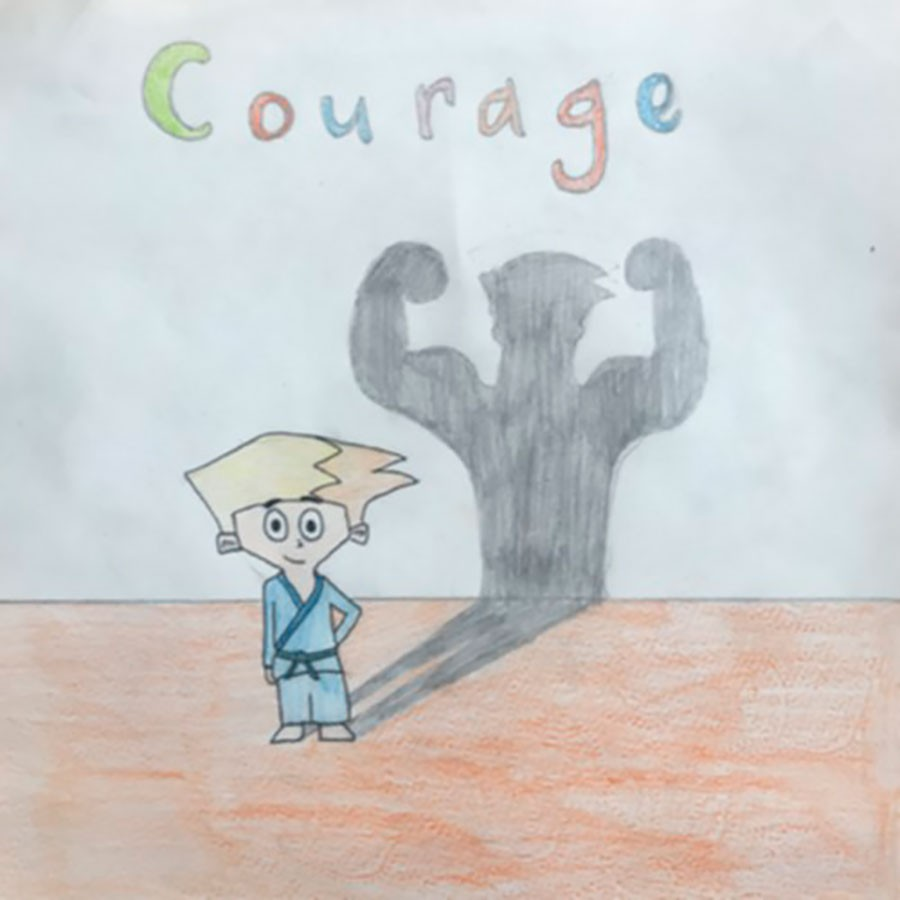
Now, courage has more than one ‘meaning;’ we can understand this virtue in more than one way. For one, courage means courage of heart, the boldness to pursue real knowledge of ourselves and of God. And it also means to face the ordeals that must be faced in order to grow, whether the growing needs to be done at the personal level as part of our spiritual formation, or at a communal level. There are times where you will link arms with others to face whatever needs to be faced, and to called out whatever needs to be called out (or, as apparently now said in modern parlance, to “call in” whatever needs to be called in). And at times we will need to stir up ourselves the courage to suffer for Truth, for the Ground of Being, for God. This is a courage that is born from a real, deep insight, from wisdom, and an unyielding sense of responsibility to what is right, good, true, and beautiful, rather than what is easy, expedient and comfortable, though untruthful and corrosive.

Regardless of what the situation is where courage is needed, it will most likely be a desolate time, a lonely, lonely existence, a wilderness existence. It’s like grief…when we are grieving, we just want the whole world to stop and be in that place with us. And guess what: the world does not stop. People continue to carry on with what seems to us as a mundane existence, with not caring what we are experiencing. And with courage there is possibly another variable at play: as Dr. Beverly Crusher told Admirable Picard at the beginning of season 3 of the Star Trek show, ‘Picard’: “trust no one.” You will perceive people lining up against you, either overtly in light of their actions, or implicitly, because of their silence. Because fear will be ever present and fear paralyzes.

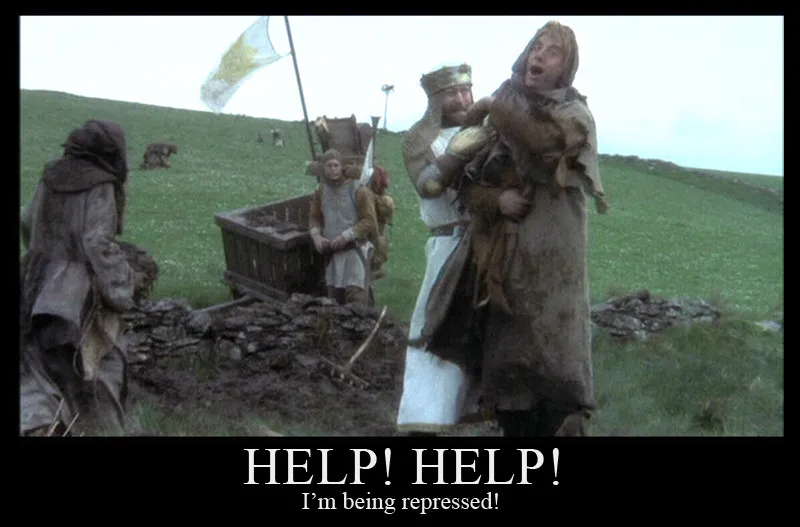
And darkness and fear are surrounding Jesus’ loving actions of washing his disciples’ feet tonight. Just think how Peter will soon act because of…fear. He denies Christ not once, not twice, but three times. If you are in a situation demanding you dig deep to muster that courage of heart, the challenge is not to fall asleep or to deny Christ. Meaning we are not to be like a town crier, with getting people to notice either the pain we are in, or what we are going through, by ringing that bell while crying “I am being persecuted!” or “I am being repressed!” While Twitter is a great space for this, it is much beyond Twitter, much beyond the focus in NYC this week, as these loud exclamations of victimhood is pervasive in church circles too, regardless of denomination. May we remember what Hadewjich said: we are to, “take care that God be honored by you and by all those whom you can help, with effort, with self-sacrifice, with counsel, and with all that you can do unremittingly.” Otherwise, we will keep denying Christ, to our detriment.

That does not mean we do not talk about our experiences or how we are feeling. We do need to process; that is vital for our spiritual formation. As we learned during our various Celtic Christian studies that began during Advent, a good ‘resource’ is to find a ‘soul friend,’ a friend worth the name, someone who can keep silent with what you need to share. We do need the proverbial shoulder where we can be vulnerable and express our full range of emotions. Emotions are not bad in-of-itself, whether it is anger, rage, or dejection. Where the problems begin is how we choose to express our emotions. But we can actually pray our emotions and the Psalms are a great place to start.

The Psalms are written by a human hand, expressing every conceivable emotion to God. Jesus himself expresses the most heart wrenching plea from the cross: My God! My God! Why have you forsaken me? (Psalm 22). My point is simply we do not belittle ourselves and make a public spectacle of ourselves, or by projecting onto others and act out our emotions against someone else.

Instead, what do we do? We follow the example of our Master, Jesus, the Christ: we wash the feet of others. We see to the basic needs of our friends. As Hadewijch wrote, we “make haste to virtue in veritable Love.” We love others, humbly.

And so, tonight, we are reminded that to live a beautiful life, as human beings, in addition to loving humbly, we must and will suffer. Like Jesus, at times, our suffering may be of the prophetic kind. What do I mean by that, well, some time ago, I saw the documentary What Our Fathers Did: A Nazi Legacy. The filmmaker is a Jewish human rights lawyer, whose family was essentially decimated during the Shoa. He said, “We’re all prone to feelings of group loyalty, a sort of tribal instinct that lumps people together, we tend to see people as victim or perpetrator, as us or them. I understand that tribal instinct, indeed I feel it myself….but as a lawyer, I’ve learned to mistrust being swayed by such feelings, to try to avoid a tribal instinct, when it comes to dealing with issues of justice.”

Like Jesus, and the prophets before him and since, taking a prophetic stance carries with it a considerable burden. Speaking from God’s perspective should not be taken lightly. Scars, condemnation and misunderstandings do go with the territory. What may appear clear, or apparent to supposed evidentiary standards, is, at times, no-where even close to the contradictory truth that you alone may bear. Any training, life experience, overall likeability and respect may, in the end, give way to a few seconds, minutes, or even one statement. And, in the end, as with Jesus, perhaps all you can do with the resulting- overwhelming- hostile scrutiny coming at you, is to respond, “You say so” (see Luke 23:3). Or even to publicly remain silent, which will be to the amazement and wonder of many (see Matthew 27:14; Mark 15: 4-5).

Because there is no room, in justice, for loyalty; there is no room, in justice, for conformity; there is no room, in justice, for friendship, indeed, there is no room, in justice, for even love. Justice, is truly, blind. Now, justice and unity are rightfully intertwined. But unity does not equal lock step formation or uniformity, but a holding of the tension between distinct individuals and the infinitely generous Love of absolute communion. Because unmerited suffering – the cross – is redemptive.

And speaking of the cross, I will now close with a portion from Mary’s Way of the Cross, which is an alternative liturgy for Stations of the Cross, written from Mary’s point of view. As Jesus is carrying that heavy cross, he and Mary meet:

Mary:
I had managed to break through the crowd
And was walking side by side with my son.
I called to him through the shouting voices,
He stopped.
Our eyes met, mine full of tears of anguish,
His, full of pain and confusion.
I felt helpless;
Then his eyes said to me,
“Courage! There is a purpose for this.”
As he stumbled on, I knew he was right.
So, I followed and prayed silently.

The people then pray:
Lord Jesus, forgive me the many times our eyes met and I turned mine away.
Forgive me the times things did not go my way
And I let everyone know about it.
Forgive me the times I brooded over little inconveniences
Or became discouraged, and did not heed your call to courage!
Yes, Lord, our eyes have met many times, but fruitlessly.

….We adore you, O Christ, and we praise you, because by your holy cross you have redeemed the world. Amen.

(turn up those speakers for the song below)

Prayer for Peace

1 Feb


prayer-for-peace

I have been at a loss for words.  I have appreciated the messages of concern and support. Modern technology is indeed a beautiful thing at times: Skype, text, email, and yes even social media…it can provide a feeling of fellowship and erase distance.

A movie night with lots of popcorn at #5 could really do me some good right now.  Alas, if I had imminent committed international travel plans, I would cancel them.  Naturalized citizens have also been targeted.

Not that I am surprised by any of this.

In any event, we must remain committed, especially to contemplative practices.  The rediscovery of contemplation should give us hope for the maturing of religion & moving beyond partisan politics.

And the politics certainly will not quiet to tolerable levels any time soon. Reuters now advises its reporters that covering the U.S. will be akin to covering Zimbabwe, China, Egypt, Russia.

With that, I am going to provide a reflection from February’s Give Us This Day: Daily Prayer for Today’s Catholic, titled Prayer for Peace:

To the Creator of nature and humankind, of truth and beauty, I pray:

Hear my voice, for it is the voice of the victims of all wars and violence among individuals and nations.

Hear my voice, for it is the voice of all children who suffer and will suffer when people put their faith in weapons and war.

Hear my voice when I beg You to instill into the hearts of all human beings the wisdom of peace, the strength of justice, and the joy of fellowship.

Hear my voice, for I speak for the multitudes in every country and in every period of history who do not want war and are ready to walk the road of peace.

Hear my voice and grant insight and strength so that we may always respond to hatred with love, to injustice with total dedication to justice, to need with the sharing of self, to war with peace.

O God, hear my voice and grant unto the world Your everlasting peace. (St John Paul II)


“The root of all war is fear,” the Trappist monk Thomas Merton wrote.  This line has echoes in St. John Paul II’s prayer for peace, as he calls upon the creator of all to give us strength to overcome the fear that leads to so many in our world to put “their faith in weapons and war.”

And yet, as Merton and John Paul II would attest, it is more than battle lines and firearms that define war.  Violence, division, hatred– these evils arise from the seed of fear planted in our hearts, nurtured by our self-interest, and harvested by a worldly logic that says “you come first” and “each one for themselves.”  I may not shoot, stab, or bomb another person, but in so many ways I find myself nourishing that seed of fear with my self-righteousness and disregard for others such that, as Pope Francis often says, my conscience grows numb and my heart cold to the concerns and needs of others.

Even our everyday language is filled with the violent imagery of war: war on terror, war on drugs, war on poverty, and so on.  But something about this way of speaking and thinking doesn’t sit comfortably alongside a faith that believes in a God who enters our world as the Prince of Peace.

If we saw the suffering and inequity that lead desperate individuals to acts of terror, we would respond with God’s commandment to love.  Instead, we declare a war on terror and bomb strangers from drones.

If we saw the agony and illness of addiction that drives the drug trade, we would respond with appropriate support and care.  Instead, we declare a war on drugs and put more of the vulnerable in prison.

If we saw the systems of injustice and oppression that lead to poverty, we would respond by working to reform these structures of evil.  Instead, we declare a war on poverty and blame victims who never had a chance, proclaiming from our positions of comfort that they should simply “get a job.”

Indeed, the root of all war is fear.  But if we wish to aid God in answering St. John Paul II’s prayer, we must begin by acknowledging the fear in our own hearts and allow God’s peace, which the world cannot give, to take root instead (Fr. Daniel P. Horan, OFM, Franciscan friar and author of several books, including God is Not Fair and Other Reasons for Gratitude.  To learn more, go to his website DanHoran.com).

BC:AD

26 Dec

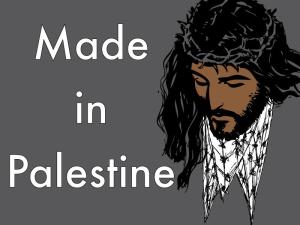
jesus-made-in-palestine-300x225-copy

This was the moment when Before
Turned into After, and the future’s
Uninvented timekeepers presented arms.

This was the moment when nothing
Happened. Only dull peace
Sprawled boringly over the earth.

This was the moment when even energetic Romans
Could find nothing better to do
Than counting heads in remote provinces.

And this was the moment
When a few farm workers and three
Members of an obscure Persian sect
Walked haphazard by starlight straight
Into the kingdom of heaven.

U.A. Fanthorpe (born 1929)

DSC_0114

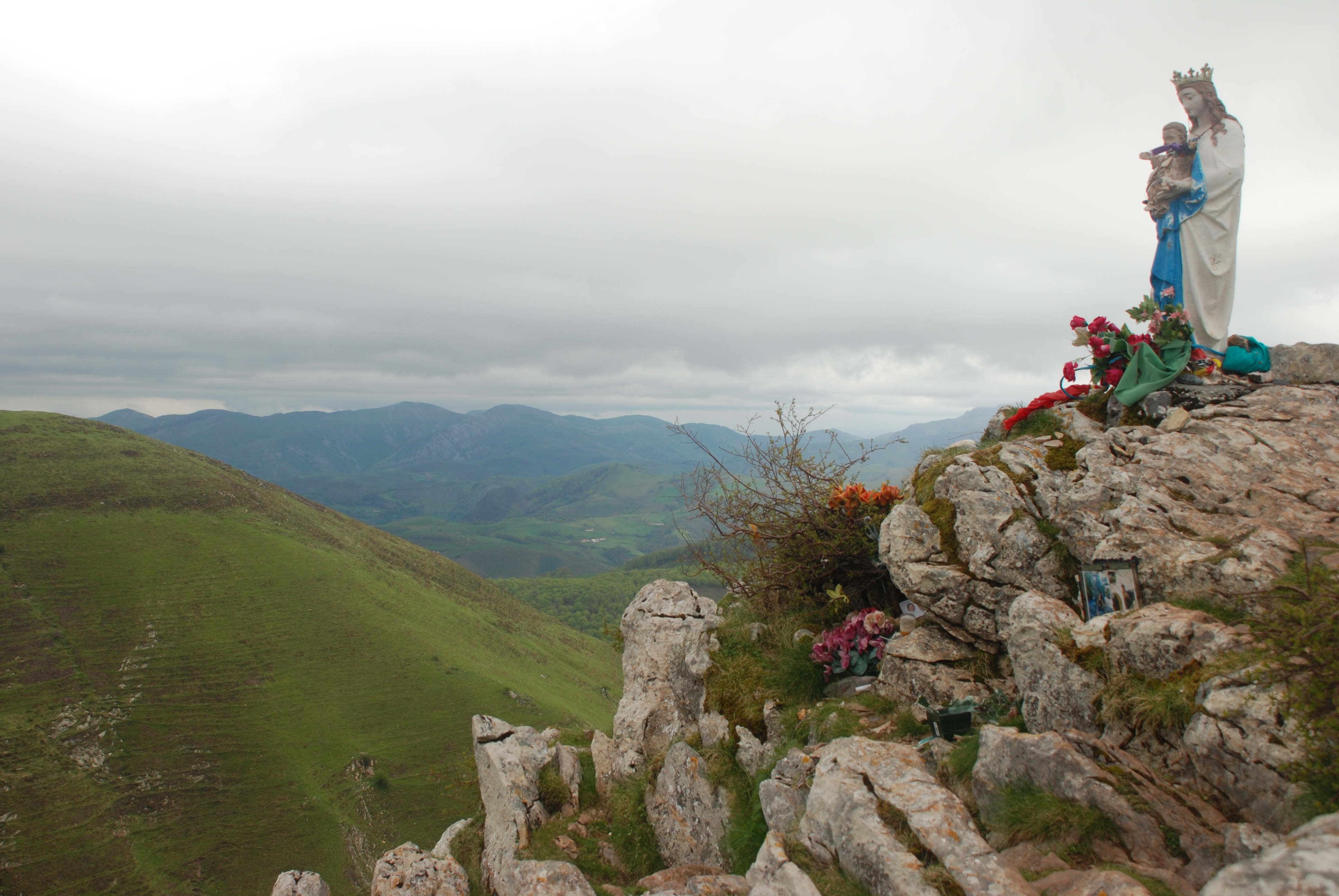
Camino de Santiago, April 2014

A Prayer for Leadership

8 Nov

dsc_0257

Photo Credit: Me, whilst traversing the Camino de Santiago, May 2014

– from “A Prayer for Leadership” by Joan Chittister

Give us, O God,
leaders whose hearts are large enough
to match the breadth of our own souls
and give us souls strong enough
to follow leaders of vision and wisdom.

In seeking a leader, let us seek
more than development of ourselves-
though development we hope for,
more than security for our own land-
though security we need,
more than satisfaction for our wants-
though many things we desire.

Give us the hearts to choose the leader
who will work with other leaders
to bring safety
to the whole world….

We Are the Balm in Gilead

18 Sep

386

Photo Credit: Christian Peacemaker Teams

What follows is a message I delivered Sunday, September 18, 2016 at the Unitarian Universalist Fellowship, Salisbury, Maryland, for their designated Peace Sunday, to commemorate the upcoming International Day of Peace (September 21).  I was asked to offer a reflection of my service with Christian Peacemaker Teams and the concept of peacemaking.

——————————————————————

My Friends, we meet on holy ground.  Let’s take a moment to extend our appreciation to the Assateague, Choptank, Piscataway, Wicomico of the Naticoke band, and Pocomoke peoples- the First Peoples- who resided in this region we now call Wicomico county. If I neglected other nations, I beseech forgiveness.  We honor this, their land.  We honor their proud, continuing, living spirit and heritage.  We, descendants of settlers, and sojourners on this side of Creator’s kingdom, yearn to live in right relationship with our Indigenous sisters and brothers.  We give thanks for the Standing Rock Sioux Tribe for their continued witness against the Dakota Access Pipeline.  May we have ears to hear….

The photos that will accompany my remarks, are just a fraction from my years of service with CPT.  But just to give some context, I included: 1) the Alqonquins of Barrier Lake, an Indigenous community in a colonial province now known as Quebec, who challenged unwanted clear cut logging on their traditional lands; 2) Elsipogtog, a Mi’kmaq community in the colonial province of New Brunswick, who in 2013 received international attention because of their steadfast resistance to proposed fracking on their un-ceded traditional lands; 3) Grassy Narrows First Nation located in the colonial province of Ontario, who also have received international attention because they have the longest active blockade, resisting unwanted clear cut logging on their traditional territory; 4) Hebron and the South Hebron Hills, Palestine. Please know, I have selected what I will term “G rated photos.”

23

Photo Credit: Pei Ju Wang

For more context to my bio that appears in this morning’s bulletin, I am female, LGBT, Iranian national by birth (from Shiraz), supposedly from the Quashqai people, an Indigenous tribe of Iran. I now carry a US passport. That makes me an Iranian-American, but I really have no idea what that is supposed to mean. I was raised within the Quaker tradition. After many years being un-churched, I am now an Episcopalian when on this side of the border and Anglican when on the northern side.  I am a ‘smells and bells’ type gal, with more incense, the better. However, I embrace the contemplative, mystical heart.

While serving with CPT, my teammates referred to me as the walking i-Pod.  I have this uncanny ability to burst into song, with some random tune, even during rather stressful moments, when police appeared to be multiplying like locusts.  Prior to CPT, Lady Justice (the stoic woman-blindfolded-with even scales in one hand and sword in the other) enamored me, so I became one of those dreadful, locust like lawyers.

Because of that continuing interest of mine, I am currently reading “The Lynching: The Epic Courtroom Battle that Brought Down the Klan” by Laurence Leamer.  In it, Clarence Darrow’s ‘The Story of My Life” is referenced.  Mr. Darrow was describing that as a young lawyer, when hanging out his shingle, “not only could I put myself in the other person’s place, but I could not avoid doing so.  My sympathies always went out to the weak, the suffering, and the poor.  Realizing their sorrows, I tried to relieve them in order that I might be relieved.”  I’m wired that way too.

Laurence Leamer then continues: “It’s hard to see suffering.  It’s hard to see injustice.  It hurts to see evil triumph.  And when it doesn’t hurt, then you’re dead inside.”

49

Photo Credit: Christian Peacemaker Teams

……Ferguson. Baltimore. Freddy Gray. Dallas. Baton Rouge. Sandra Bland. Philando Castile. Alton Sterling. Mother Emanuel 9. Alison Parker and Adam Ward. Orlando. San Bernardino. Paris. Aurora. Sandy Hook. Trumpism and the Trumpeters.  A great beautiful wall. Gold star families. Birtherism. Basket of deplorables.  Little Marco. Lyin’ Ted.  WikiLeaks. Snowden. The Russians are coming! The Russians are coming!…with their computers.  Emails. Crooked Hillary. Clinton’s Body Double…… speaking of i-Pods, especially with our political circus, I can’t help but think of the song “We Didn’t Start the Fire” by Billy Joel.

Music, i-Pods and circuses aside, I was not living in the U.S. when Sandy Hook broke the world’s heart. But I remember thinking: well, we at least have reached our Titanic moment.  Who would have thought that 20, primarily white, little, angelic faces, with their 6 heroic defenders, could not produce the needed life boats, or in this case, sensible gun control measures?

I crafted my title from the prophet Jeremiah:

My joy is gone, grief is upon me,
my heart is sick.

Hark, the cry of my poor people
from far and wide in the land:

“Is the Lord not in Zion?
Is her King not in her?”

(“Why have they provoked me to anger with their images,
with their foreign idols?”)

“The harvest is past, the summer is ended,
and we are not saved.”

For the hurt of my poor people I am hurt,
I mourn, and dismay has taken hold of me.

Is there no balm in Gilead?
Is there no physician there?

Why then has the health of my poor people
not been restored?

O that my head were a spring of water,
and my eyes a fountain of tears,

so that I might weep day and night
for the slain of my poor people! (Jeremiah 8:18-9:1, NRSV)

50

Photo Credit: Christian Peacemaker Teams

The Book of Jeremiah contains some of the most anguished, sharply harsh words in all of Scripture.  It’s important to keep in mind that the prophets of Israel, Jeremiah included, should not be thought of as social reformers or hippy, lefty social critics.  For one, they were poets.  While with Jeremiah it was “the word of the Lord” that prompted him to speak, his highly charged and emotional words help keep our present hopes, our worst fears and our continuing yearning faith real.

Jeremiah is the literature of the exiles, people who had lost their homes, future, perhaps loved ones and were simply trying to make sense of their age.  Indeed a very dark and difficult time.  Jeremiah actually shifts back and forth, between complete despair to empowering hope, from unwavering commitment to God to hot, hot, finger-wagging anger against God’s demands.

Jeremiah is actually one of my favorite books of Scripture.  It’s raw, honest, hard, revealing.  Rather than polite, superficial, fuzzy-bunny type speech, with everyone smiling, upbeat and irritatingly happy and content with cup of coffee in hand, it provides an- overwhelming- invitation to a passionate, honest relationship with the Creator… who for me, has called us to not only be a community of love and hope, but also of truth and realism.  And truth and realism is rarely do I dare say “black and white” but complex, multi-layered, confusing, complete with contradiction…complete with mystery.  When we begin to listen to words we really don’t want to hear, appearances eventually give way to reveal a breathtaking and marvelous view of God’s love and grace.  And for me, that’s the stuff of spiritual formation.

16

Photo Credit: Pei Ju Wang

But we need space for laments…and grief.  It seems the capacity for lament and accompanying public expressions of grief have all but disappeared.  Anything that is sad, painful and in any way distressing, is left at the door, like a coat or hat rack.  This is actually inconceivable to Jewish/Christian tradition, which recognizes that everything- good as well as bad-is within God’s sphere.  Grief then should not be outside or beyond worship space, but intimately within it.

And you know, grief also is a prophetic activity.  Too many leaders like to put a happy face on everything.  It takes a truthful prophet to have the guts to grieve a societal disaster.  With that I’m not simply talking about a September 11th or a Paris type happening.  But that is needed.  Far too many times, I become agitated with “the Left” and its inability to pause and reflect on lives lost with September 11th type of events, before automatically honing their Jeremiah type skills and ranting about US policy or needed immediate systematic changes.  I even saw “the Left’s” callousness the morning Alison Parker and Adam Ward were gunned down on live tv.

But it also takes guts to mark a disaster that does not garnish overwhelming public empathy or pity. Here’s an example: perhaps while not grief per se, can we be moved with pity and compassion towards Secretary Clinton, after viewing that cell phone video that emerged from the 9/11 memorial?  Full disclosure: I am a Bernie supporter unenthusiastically voting ‘for’ Clinton.

…..Tears are a sign of relinquishment, a letting go of false hopes and false gods or idols (whether power, reputation, status, or popularity)….an admission that we are truly in sad shape and desperately in need of deliverance.

But — grief is not the final prophetic act.  With our tears, we fully open ourselves to divine deliverance. “History has proven over and over again that unmerited suffering is redemptive,” Martin Luther King Jr. said at Addie Mae Collins, Carole Roberston, Cynthia Wesley and Denise McNair’s funeral in 1963.  The young girls died, while changing into their choir robes at the 16th Street Baptist Church, September 15, 1963, in Birmingham, Alabama. “God still has a way of wringing good out of evil,” he said.

57

Photo Credit: Christian Peacemaker Teams

And that way, involves you and me.  Just a bit ago I said that in 2012 I thought Sandy Hook was our Titanic moment…meaning the sinking of the Titanic painfully brought the requirement that each ship carry enough life boats for all souls aboard.  But that entails leaving, abandoning ship.  Fleeing.  Fight or flight is humanity’s on going dilemma.

I also said that I embrace the contemplative heart.  The contemplative stance is the Third Way to fight or flight.  To quote Fr. Richard Rohr: “We stand in the middle, neither taking the world on from another power position nor denying it for fear of the pain it will bring. We hold the dark side of reality and the pain of the world until it transforms us, knowing that we are both complicit in the evil and can participate in wholeness and holiness. Once we can stand in that third spacious way, neither directly fighting nor denying and fleeing, we are in the place of grace out of which genuine newness can come. This is where creativity and new forms of life and healing emerge.”

3815

Photo Credit: Christian Peacemaker Teams

What you have been viewing as I speak, is a glimpse of that creativity and new forms of life, even though the majority of it does come from what we would call Earth based traditions.  I can appreciate that this may not alleviate feelings of inadequateness.  “Don’t search for God in far lands,” Mother Teresa- or St Teresa of Calcutta- once said…”[he] is not there.  [He] is close to you, [he] is with you.  Just keep the lamp burning….Watch and pray.”  Before we can love the entire world, try to love just one other person-someone apparently unlovable, unwanted, or rejected…basically someone who simply annoys you.  That’s peacemaking too.

And for what it’s worth, I constantly fail at that- loving and embracing people within my own, personal sphere, who frankly annoy me.  Perhaps it is easier to love an unknown, distant world, even with its mean streak and nonsensical hatred.

Now my service in CPT was not always spent on a police line or in close proximity to soldiers.  In fact, just the opposite.  For instance, I co-facilitated non-violent direct action workshops in a variety of settings, for a variety of communities.  The distinction between violence and non-violence is…complex.  Here’s the definition we used:  Violence is power that Dominates, Dehumanizes, Diminishes or Destroys Ourselves, Others or Creation.  Nonviolence is power that Liberates, Humanizes, Heals and Creates Ourselves, Others or Creation.  The key is to focus on the concept of POWER, an active force that influences a situation.  In other words, violence is not an action and nonviolence is not inaction.

72

Photo Credit: Christian Peacemaker Teams

Of course we know that absolute power corrupts absolutely.  Definitions are one thing.  Standing firm, against the current, is quite another.  I recently saw the documentary What Our Fathers Did: A Nazi Legacy.  The filmmaker is a Jewish human rights lawyer, whose family was essentially decimated during the Shoa. He said, “We’re all prone to feelings of group loyalty, a sort of tribal instinct that lumps people together, we tend to see people as victim or perpetrator, as us or them.  I understand that tribal instinct, indeed I feel it myself….but as a lawyer, I’ve learned to mistrust being swayed by such feelings, to try to avoid a tribal instinct, when it comes to dealing with issues of justice.”

Your principles and traditions embody this.  And while prophetic witness is not only as old as the Bible, it carries with it a considerable burden.  Speaking from God’s perspective should not be taken lightly. Scars, condemnation and misunderstandings do go with the territory.  What may appear clear, or apparent to supposed evidentiary standards, is, at times, no-where even close to the contradictory truth that you alone may bear. Any training, life experience, overall likeability and respect may, in the end, give way to a few seconds, minutes, or even one statement.  And, in the end, as with Yeshua, perhaps all you can do with the resulting- overwhelming- hostile scrutiny coming at you, is to respond, “You say so” (see Luke 23: 3). Or even to publicly remain silent, which will be to the amazement and wonder of many (see Matthew 27: 14; Mark 15: 4-5) and to the dismay of close friends and family members.

Because there is no room, in justice, for loyalty; there is no room, in justice, for friendship; indeed, there is no room, in justice, for love.  Justice, is truly, blind.  Now, justice and unity are rightfully intertwined.  But unity does not equal lock step formation or uniformity, but a holding of the tension between distinct individuals and the infinitely generous love of absolute communion.      

To conclude, Anna Howard Shaw, the first woman ordained in the Methodist tradition, wrote in 1888- “No man or woman has ever sought to lead his fellows to a higher and better mode of life without learning the power of the world’s ingratitude; and though at times popularity may follow in the wake of a reformer, yet the reformer knows popularity is not love.  The world will support you when you have compelled it to do so by manifestations of power, but it will shrink from you as soon as power and greatness are no longer on your side.  This is the penalty paid by good people who sacrifice themselves for others.  They must live without sympathy; their feelings will be misunderstood; their efforts will be uncomprehended. Like Paul, they will be betrayed by friends; like Christ in the agony of Gethsemane, they must bear their struggle alone…”

Remember, unmerited suffering is redemptive.  From Barriere Lake, to Elsipogtog, Grassy Narrows, Standing Rock Sioux, to Black Lives Matter and yes to the on-going, grueling, selfless- commitment by those in law enforcement who are striving to get it right, hope remains.

St. Teresa of Calcutta believed we were put on earth to do “something beautiful for God.”  We are the balm. Go and do likewise.  Selah.  Amen.

14

Photo Credit: Pei Ju Wang

A Prayer for Refugees

21 Feb


DSC_0012

US/Mexico Borderlands, February 2014

Our Gracious Lord,

There are many in Your world today who have been forced

     from their homes by persecution and violence.

Keep them in your constant care, and bring them to a place

     of safety.

Be the Good Shepherd to refugees who are in flight.

     Guide them to the green pastures of safety.

Be the Everlasting Father to refugees who have lost home

     and loved ones.  Lead, protect and provide for them.

Be the Great Physician to refugees who are suffering.

     Grant them healing and hope.

Be the hiding Place to refugees who are languishing in

     camps.  Shelter their souls as well as their bodies.

Be the Deliverer to refugees who have been able to return

     home.  Restore their lives so that those who have sown

     in tears may reap in joy.

Be the Wonderful Counselor to refugees who have been

     resettled.  Help them find their way in a new land.

Be the Giver of all good gifts to those who serve refugees.

     Empower them to do justice and love mercy and walk

     humbly with You.

Be the Lord of lords to all the earth, that those who rule would do so in justice and rigthteousness, and no one would have to become a refugee anymore.

We ask these things in the precious and powerful name of Jesus. Amen.

– Lutheran Immigration and Rescue Service